
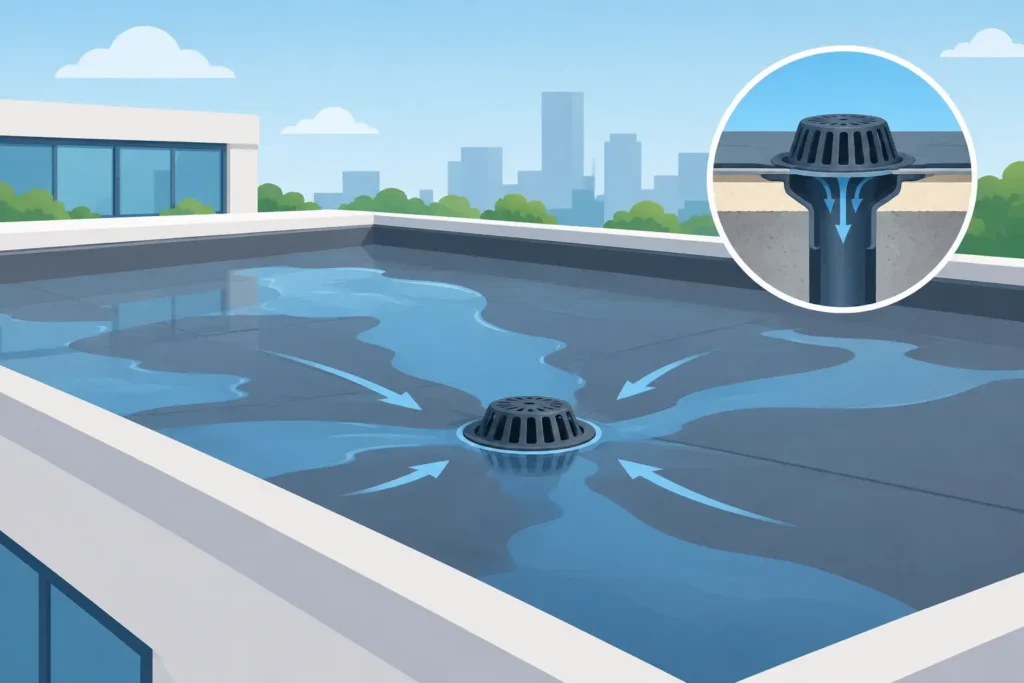
A flat roof should not hold water for days after rainfall. Small puddles can be normal while the surface dries, but persistent ponding puts extra strain on the waterproof covering, joints, outlets and roof structure. Knowing how to improve flat roof drainage can prevent a minor maintenance issue becoming an internal leak, damaged insulation or an avoidable roof replacement.
For homeowners, landlords and commercial property managers, the right solution depends on why water is collecting. A blocked outlet needs a different repair from a roof with inadequate falls or a surface that has deteriorated over time. A professional inspection identifies the cause before work begins, so the repair is proportionate and built to last.
Start by finding where the water should go
Flat roofs are designed with a slight fall rather than being completely level. This gentle slope directs rainwater towards an outlet, hopper, internal drain or gutter. When water remains in one area, the drainage route is usually obstructed, insufficient or interrupted by a low spot in the roof surface.
Begin with a visual check from a safe position. Look for leaves, moss, silt and loose debris around outlets, gutters and downpipes. Overflow marks on walls, water spilling from gutter edges, or vegetation growing near a roof outlet are useful signs that rainwater is not clearing as it should.
Do not walk on a roof unless it is safe to do so and you know the surface can take your weight. Older felt roofs, fragile rooflights and wet membranes can be hazardous. For larger roofs, commercial premises or any roof showing signs of deterioration, a qualified roofer should carry out the inspection.
Check gutters, hoppers and downpipes
A roof outlet can be clear while the obstruction sits further along the drainage system. Gutters blocked with leaves or downpipes filled with debris can cause water to back up onto the roof. In winter, ice can add to the problem, particularly where gutters already have poor flow.
Clear accessible debris carefully, then check whether water can pass freely through the downpipe and away from the building. If a downpipe discharges too close to the property, this can create damp at ground level even when the roof itself is draining correctly. Connections, brackets and joints also need attention, as a leaking gutter can be mistaken for a roof leak.
Regular gutter cleaning is one of the simplest ways to protect a flat roof. Properties near trees may need checks more often, especially after autumn leaf fall and heavy storms.
How to improve flat roof drainage at the source
If the outlets and gutters are clear but water still pools, the roof surface needs closer assessment. The most effective repair is the one that restores a clear route from every section of the roof to its drainage point.
Correct low spots and inadequate falls
Over time, a flat roof can develop dips where water collects. This may happen because of movement in the deck beneath, ageing materials, previous patch repairs or poor installation. Repeated ponding can then accelerate wear in the waterproof layer.
A roofer may improve falls using tapered insulation, firring pieces or a purpose-made levelling system, depending on the roof construction and whether insulation is being upgraded. Tapered insulation is often a practical choice during refurbishment because it can improve drainage while supporting thermal performance.
The correct fall is not identical for every roof. It depends on the roof size, outlet position, covering type, construction and surrounding details such as parapet walls or rooflights. Simply adding material to one area without planning the drainage route can move the problem elsewhere or affect door thresholds and flashings.
Add or upgrade outlets where needed
One undersized outlet may struggle during heavy Northamptonshire rainfall, especially on a large garage, extension, block roof or commercial unit. Adding another outlet, installing an internal drain, or improving the size and positioning of existing drainage points can reduce the distance water has to travel.
This work must be planned carefully. New outlets require properly sealed penetrations through the roof covering, and internal drainage needs suitable pipework and safe discharge arrangements. A poorly detailed outlet can become a leak point, so this is not a job for a quick surface fix.
On roofs surrounded by parapet walls, emergency overflow provision can also be sensible. An overflow does not replace primary drainage, but it gives excess water a controlled escape route if an outlet becomes blocked during severe weather.
Repair damaged roof coverings and edges
Blisters, splits, lifting seams and cracked flashings can hold water or allow it beneath the roof covering. The same applies to loose edge trims and worn details around pipes, rooflights and upstands. When water gets under the membrane, the insulation or deck can become saturated, making drainage and repair more complicated.
Localised damage can sometimes be repaired if the rest of the roof remains sound. If the covering has reached the end of its serviceable life, however, repeated patches may offer poor value. A replacement flat roof can provide the opportunity to form proper falls, renew outlets and install a modern waterproof system with guaranteed workmanship.
Do not ignore signs inside the building
A drainage issue may first appear indoors. Brown marks on ceilings, damp smells, bubbling paint, mould near an external wall or dripping after prolonged rain all need prompt investigation. Water can travel away from the point where it enters, so the visible stain is not always directly below the defect.
For commercial properties, standing water can also affect operations. It may increase slip risks near entrances, damage stored goods or disrupt tenants if water penetrates ceilings. Planned maintenance is generally less disruptive and less costly than responding after a leak has developed.
Build drainage checks into routine maintenance
Flat roof drainage is not a fit-and-forget part of a property. A simple routine helps spot changes before water has time to cause damage. Check the roof and rainwater goods after periods of heavy rain, high winds and leaf fall. Look for debris around outlets, water taking longer than usual to drain, sagging gutters and new areas of ponding.
For managed buildings, record inspections and repairs. Photographs taken after rainfall can help show whether a low spot is getting worse and give a roofer useful information before a visit. Roofs with solar panels, air-conditioning equipment or frequent foot traffic may need more regular checks because these features can affect water flow and surface wear.
Avoid placing planters, stored items or equipment where they block outlets or create channels that trap debris. If access is needed for maintenance equipment, use suitable walkways rather than repeatedly walking across the waterproof surface.
When to call a professional roofer
It is time to arrange an inspection if water is still present more than 48 hours after dry weather, an outlet repeatedly blocks, the roof covering shows visible damage, or there are signs of damp inside. Ponding alone does not always mean a roof has failed, but it should be assessed where it is persistent or worsening.
A proper survey should consider the roof covering, deck, insulation, falls, outlets, gutters, downpipes and perimeter details together. This avoids treating one visible symptom while leaving the underlying cause unresolved. It also gives property owners a clear view of whether cleaning, repair, drainage alteration or replacement is the sensible next step.
Weathershield Roofing and Guttering Services Ltd provides straightforward advice and free, no-obligation quotations for flat roofing, repairs and guttering work across Northamptonshire. With more than 15 years of practical experience, the focus is on recommending work that suits the condition of the roof and the needs of the property.
A well-drained flat roof protects far more than the room beneath it. Address a slow outlet, damaged surface or poor fall early, and you give the whole roof a better chance of delivering the reliable service it was built for.