
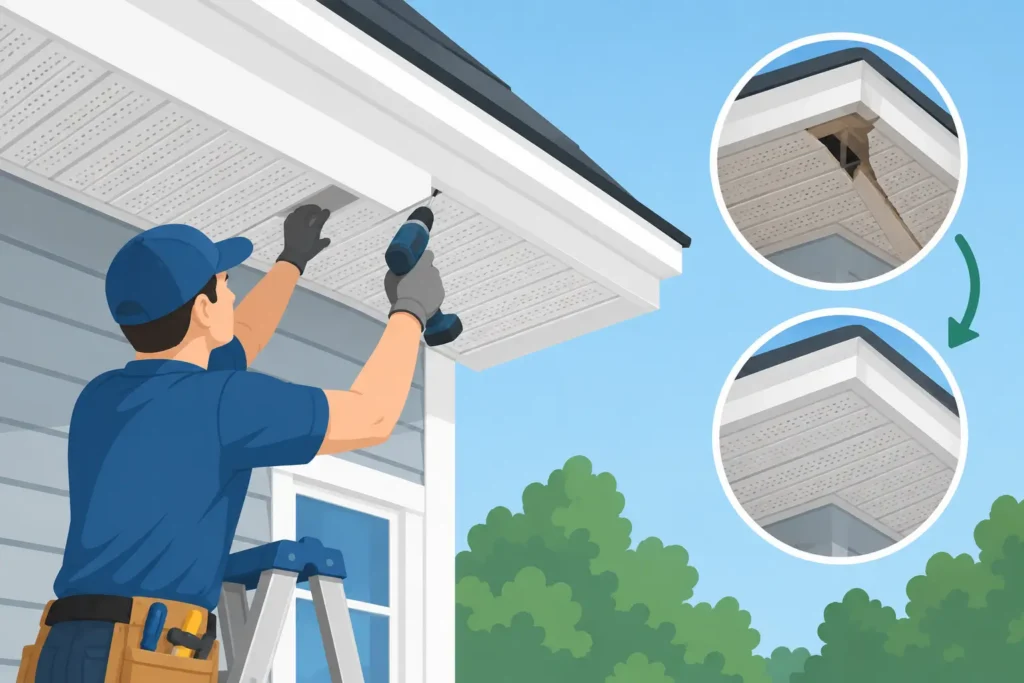
A stained or sagging soffit is rarely just a cosmetic issue. The board beneath your roof edge helps protect the rafters, keep pests out and provide ventilation to the roof space. Knowing how to repair damaged soffits starts with finding out why they have failed, rather than simply covering the damage with paint or a new panel.
For homeowners and property managers, the most common cause is water. Overflowing gutters, slipped tiles, leaking joints and poor roof drainage can all allow moisture to sit against the roofline. Left alone, that moisture can rot timber soffits, loosen fixings and spread into fascias, eaves and roof timbers.
What does a soffit do?
The soffit is the horizontal board fitted underneath the fascia at the edge of a pitched roof. From ground level, it is the section you see when looking up at the eaves. It closes the gap between the external wall and the roof edge, giving the roofline a clean finish and helping to protect the structure behind it.
Many soffits also include ventilation. Small vents allow air to move through the roof space, reducing condensation and helping to protect insulation and timbers. This means a repair must maintain the right airflow. Blocking vents to stop draughts or insects can create a damp problem elsewhere.
Older properties may have timber soffits, while more recent installations are often made from uPVC. Timber can look attractive but needs regular painting and is more vulnerable to rot. uPVC is low maintenance and moisture-resistant, although it can still crack, bow or become loose if the supporting timber or guttering has failed.
Check the cause before repairing damaged soffits
A close inspection from the ground can reveal a great deal. Look for peeling paint, dark staining, swollen timber, gaps at the joints, drooping sections, loose gutter brackets and signs of nesting birds or wasps. If water is running behind the gutter during rain, the soffit may be taking the overflow instead of the gutter carrying it away.
Use binoculars where possible rather than climbing a ladder for an initial look. If safe access is available, check whether the gutter is blocked with moss and leaves, whether the fall directs water towards the downpipe, and whether roof tiles or flashing above the damaged area appear displaced.
The location of the damage matters. A small soft patch beneath a leaking gutter joint may be a local repair. Damage running along several metres of roofline, or staining that returns after the gutter has been cleared, can point to a roof leak or failing fascia board. Replacing the visible soffit without correcting the source will only delay the same problem.
Take extra care with older soffit boards
Some older properties have asbestos-containing cement boards around the eaves. These should not be drilled, sanded, cut or broken up without suitable assessment and controlled removal. If the material looks like old grey cement sheeting, or you are unsure of its age and composition, stop work and seek professional advice.
When is a DIY soffit repair suitable?
A capable homeowner may be able to deal with a small uPVC repair at single-storey level, provided the cause has been resolved and the fascia behind it remains firm. Replacing a cracked vent grille, refitting a loose cover board or sealing a minor joint can be straightforward with the right tools and safe access.
Timber repairs are less predictable. What looks like a small rotten area often extends behind the fascia or into the ends of the rafters. It is also difficult to assess the condition of high-level roofline components safely from a domestic ladder. If there is any doubt about the supporting structure, it is better to arrange an inspection.
Do not attempt repair work in wet or windy weather, from an unstable ladder, or where gutters, cables or roof coverings may be disturbed. A fall from even a low roofline can cause serious injury. For two-storey homes, long runs of damaged soffit, commercial premises and properties with asbestos concerns, professional access equipment and experienced roofers are the sensible option.
How to repair damaged soffits: a practical approach
The exact method depends on the material and extent of the damage, but a proper repair follows a clear order.
1. Stop the water getting in
Clear guttering and downpipes, then test the flow with water once conditions are dry and access is safe. Replace leaking gutter unions, realign gutters that are holding water and check that brackets are secure. If rainwater is getting behind the gutter because it is set too low or too far from the roof edge, the gutter position may need adjusting.
Check the roof directly above the damaged section. A broken tile, worn valley, damaged felt at the eaves or defective flashing may be the real cause. Repair these faults first. A dry roofline is the foundation of a lasting soffit repair.
2. Remove only the failed material
For a small timber repair, remove loose paint and probe the board gently. Sound timber should feel firm, not springy or crumbly. Cut back only to solid material, taking care not to damage the fascia, rafters or ventilation openings.
With uPVC, remove the affected panel or cover section carefully. Many uPVC soffit systems slot into channels rather than relying on visible fixings. Avoid forcing the panel, as this can crack adjacent sections or pull the fascia trim loose.
If the fascia board is soft, bowing or unable to hold gutter brackets securely, do not treat the soffit in isolation. The fascia and soffit work together, and a weak fascia can lead to recurring movement, failed gutters and fresh water damage.
3. Repair or replace the backing structure
Where timber has deteriorated, replace rotten sections with treated timber of the correct thickness and secure it to sound supports. Any affected rafter ends should be assessed before new boards are fitted. Covering decay with uPVC may make the roofline look better temporarily, but it does not strengthen the structure.
For uPVC installations, ensure the backing is straight, dry and securely fixed. New panels need adequate support and room for normal expansion in changing temperatures. Over-tight fixings can cause distortion, particularly on long south-facing elevations that receive strong sunlight.
4. Restore ventilation and finish the repair
Match the existing ventilation arrangement or improve it where needed. If the original soffit had vents, fit replacement ventilated panels or purpose-made vent strips rather than sealing the eaves completely. Keep insect mesh clear so that air can pass through.
Timber soffits should be primed and painted with an exterior system suitable for the material. Pay particular attention to cut edges and joints, where water can enter first. uPVC does not need painting, but it should be cleaned and checked for secure joints once the work is complete.
Finally, run water through the guttering again and watch the repaired area during the next spell of rain. Water should enter the gutter cleanly, travel to the downpipe and stay away from the fascia and soffit.
Signs that replacement is the better option
Patching makes sense when damage is genuinely local and the rest of the roofline is sound. Replacement is often better value when rot has spread, several boards are loose, gutter brackets are pulling away, or the existing materials are nearing the end of their life.
A full fascia, soffit and guttering replacement also gives the opportunity to correct poor drainage, improve ventilation and create a consistent finish around the property. For landlords and commercial property managers, replacing a failing roofline system in one planned visit can be less disruptive than repeated call-outs for small repairs.
The right scope depends on the building. A modern uPVC roofline may only need one replacement panel and a gutter adjustment. An older timber installation with recurring damp may need a more thorough repair to protect the eaves properly.
Get a professional opinion where the roofline is affected
Roofline work is connected to the wider condition of the roof. A qualified roofer can identify whether the problem is limited to the soffit or whether leaking gutters, damaged tiles, failed felt or rotten fascias are contributing to it. This avoids spending money on a surface repair that will not last.
Weathershield Roofing and Guttering Services Ltd provides practical roofline repairs and replacements for homes and commercial properties across Northamptonshire. A clear inspection and no-obligation quotation can help you decide whether repair or replacement is the most sensible route.
A sound soffit should be easy to forget about. Deal with early staining, loose boards or overflowing gutters promptly, and you can protect the roof edge before a small repair develops into damaged timbers and avoidable expense.