
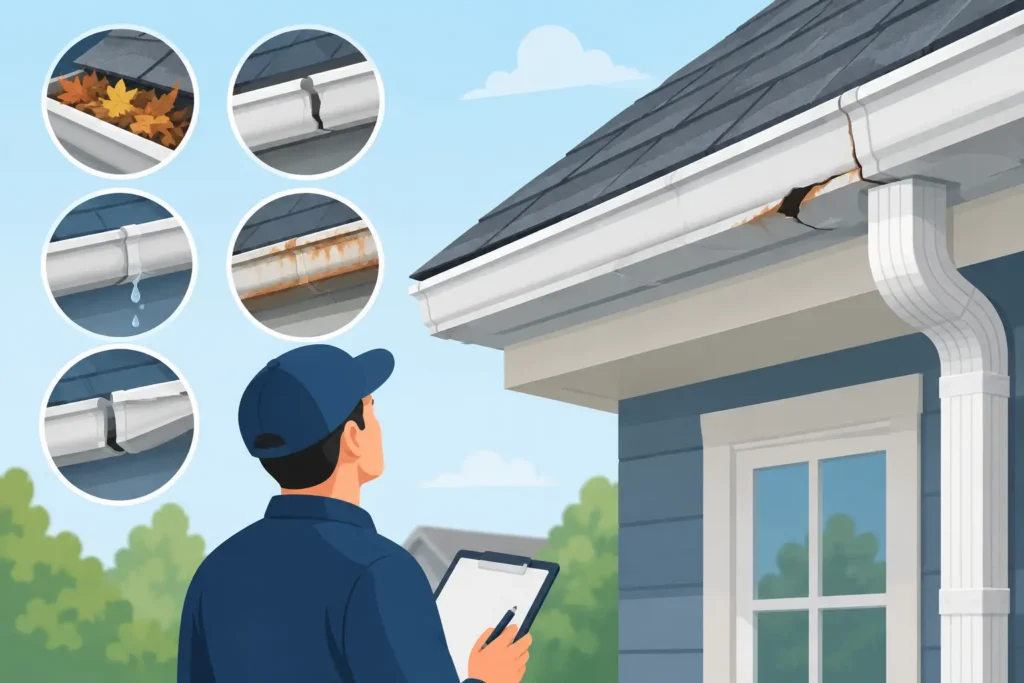
A gutter can look perfectly ordinary from the ground while quietly allowing rainwater to damage the building around it. Overflowing water, damp patches and peeling paint are often blamed on a blocked downpipe, but they can also point to a guttering system that has reached the end of its working life. Knowing when gutters should be replaced helps homeowners and property managers deal with the cause before a small roofline issue turns into costly repairs.
Gutters have a straightforward job: collect rainwater from the roof and direct it safely away from walls, windows, foundations and paths. In Northamptonshire, frequent rainfall, winter frost and wind-blown debris can put that system under steady pressure. A well-maintained gutter may last for many years, but no material is permanent.
When should gutters be replaced rather than repaired?
Replacement is usually the sensible option when problems are widespread, recurring or affecting the property itself. A single loose bracket, blocked outlet or short split can often be repaired. However, repeatedly patching several leaks across ageing guttering can cost more over time than fitting a new, correctly aligned system.
The condition of the roofline matters too. Gutters are fixed to fascias, so damaged timber, rotten boards or failing fixings may mean the guttering cannot be securely repaired in isolation. In these cases, replacing the fascias, soffits and gutters together provides a cleaner finish and gives the whole roof edge a dependable long-term solution.
For landlords and commercial property managers, recurring water overflow also creates a maintenance risk. Water running down external walls can affect decoration, brickwork and entrances, while pooling around a building may create slippery surfaces. A planned replacement can be more practical than responding to repeated call-outs during bad weather.
Signs your guttering is nearing the end of its life
Cracks, splits and holes keep appearing
Small cracks are easy to overlook, particularly in black or dark-coloured plastic guttering. Yet even a narrow split opens and closes with temperature changes, allowing water to run behind the gutter or down the wall. A local repair may be suitable if the rest of the run is sound, but several cracks usually indicate brittle, ageing material.
Rust is a similar warning sign on older metal systems. Surface rust may be treatable, but flaking metal, pinholes or corroded joints mean the gutter is losing strength. Once corrosion has taken hold, replacement is normally more reliable than trying to extend its life with sealant or paint.
Joints leak after every repair
Gutter joints are designed to allow sections to connect while maintaining a watertight seal. Over time, seals can shrink, perish or move out of place. A leaking joint is often a simple repair, especially where the guttering is relatively new.
The situation changes when multiple joints leak, sections have warped, or repairs fail again after a short period. This can mean the system is poorly supported, incorrectly pitched or simply worn throughout. Replacing the affected runs allows the gutter to be installed with the proper fall towards the downpipe.
Gutters sag, pull away or overflow
A gutter should sit securely along the fascia and carry water towards its outlet without standing water remaining in the channel. Sagging sections, loose brackets and gutters that pull away from the roofline prevent this from happening. Water then spills over the front or back edge during heavy rain.
Sometimes the answer is to replace a few failed brackets and clear a blockage. If the gutter is distorted, constantly full of water, or the fascia is no longer sound enough to hold the fixings, a full replacement is often the safer choice. Water is heavy, and a collapsed gutter can damage the roofline below as well as the gutter itself.
You can see staining or damp on walls
Brown marks beneath gutters, green algae on brickwork, peeling exterior paint and damp patches around upper walls are signs that water may not be draining where it should. These symptoms do not always mean the gutter needs replacing. Flashing defects, roof leaks and overflowing valleys can produce similar problems.
That is why a proper inspection is worthwhile. A qualified roofer can check the guttering, downpipes, roof covering and roofline together, rather than treating visible staining as a gutter issue without identifying the source.
The guttering is old and needs constant attention
There is no fixed replacement date for every gutter. Material quality, exposure, maintenance and installation all make a difference. Modern uPVC guttering can commonly provide around 20 years or more of service when fitted correctly and kept clear, while metal systems may last longer but require attention for corrosion.
Age alone is not a reason to replace a system that remains secure, watertight and correctly aligned. But if older gutters need regular sealing, re-clipping and clearing because they no longer hold their shape, planning a replacement before winter is usually the more cost-effective decision.
Repair or replacement: what is the right choice?
The best option depends on the scale of the fault and the condition of the rest of the system. A repair is often appropriate for a blockage, one displaced union, a damaged stop end or a short section affected by an impact. These are isolated faults, and resolving them promptly can prevent unnecessary replacement.
Replacement becomes more attractive when the guttering has multiple leaks, widespread cracking, poor falls, failing brackets or damaged fascias. It is also worth considering when you are having major roof work completed. Replacing tired guttering at the same time as a new roof, roof repair or fascia installation can avoid disruption later and ensures the components work together.
The lowest initial price is not always the best value. A patch may be cheaper today, but it is poor value if water continues to reach the walls or if another section fails in the next storm. A clear assessment should explain what can reasonably be repaired, what is likely to fail next, and the expected benefit of replacement.
Why correct installation matters as much as the material
New guttering only performs properly when it is fitted to a sound roofline with the correct alignment. The gutter needs a slight fall towards the downpipe, enough brackets to support its weight, secure joints and outlets positioned to handle the roof area. Downpipes must discharge water away from the building and into suitable drainage.
Oversized guttering may be appropriate for larger roofs or commercial buildings where a standard domestic profile cannot handle the volume of rainwater. Conversely, fitting a larger system where it is not needed may add cost without solving an underlying issue such as a blocked drain or defective valley. The right specification should be based on the property, not a one-size-fits-all approach.
It is also sensible to look beyond the gutter itself. Cracked render, decayed fascias, loose soffits and defective roof tiles can all allow water into the same area. Addressing connected defects at once can protect the building more effectively and avoid repeated access costs.
When to arrange an inspection
Do not wait for water to enter the property. Arrange an inspection if you notice regular overflow in rain, gutters visibly bowing under their own weight, persistent leaks at several points, or damp and staining beneath the roofline. It is especially sensible to check the system after strong winds, before winter and following roof work.
If access is difficult or the gutters sit above a conservatory, extension or commercial entrance, avoid leaning ladders against the guttering or attempting repairs in poor weather. Working at height carries obvious risks, and forcing a damaged section can make a minor fault worse.
Weathershield Roofing and Guttering Services Ltd provides practical guttering, fascia and roofing assessments for property owners across Northamptonshire. With more than 15 years of experience, the team can identify whether a focused repair will do the job or whether replacement is the sounder long-term investment.
A guttering problem is rarely improved by waiting for the next downpour. Having the roofline checked while the issue is still manageable gives you a clearer choice, protects the building fabric and helps keep rainwater where it belongs – safely away from your property.