
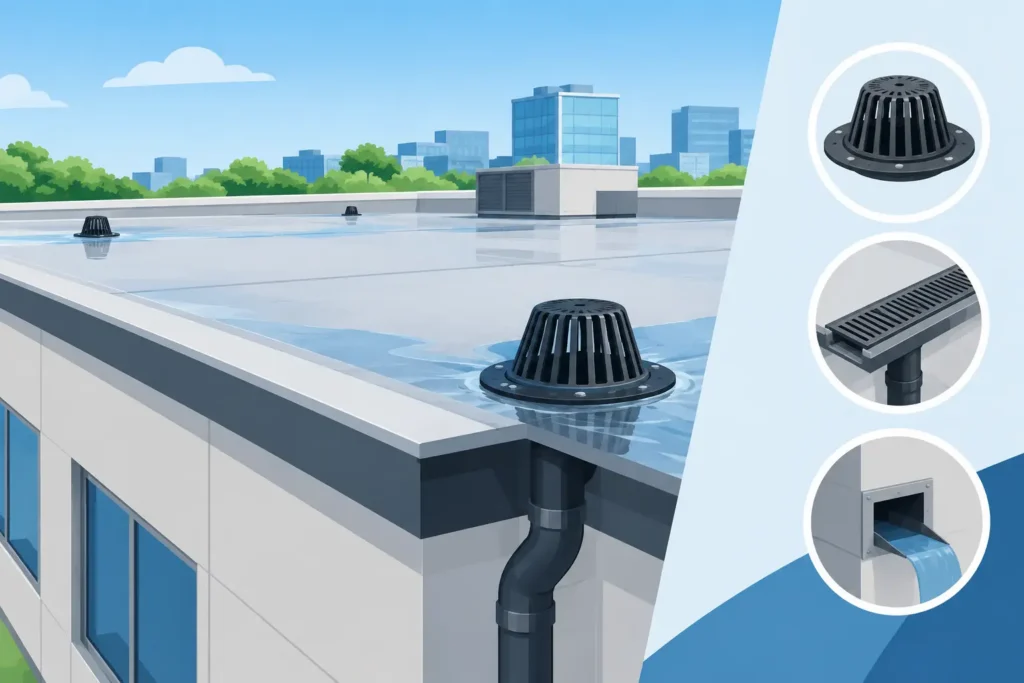
A commercial roof can look sound from ground level while holding enough standing water to stress joints, weaken insulation and find its way into the building below. The best commercial roof drainage systems move rainwater away efficiently, suit the roof construction and remain accessible for inspection. For property managers and business owners, getting this right is not an optional extra – it is a practical part of protecting the building, its contents and the people working inside it.
The right arrangement depends on the roof area, its falls, the building height, local exposure and the condition of the existing roofline. A small single-storey unit with a pitched roof needs something very different from a large flat-roofed warehouse. The aim is always the same: prevent water from ponding on the roof or overflowing where it can damage walls, foundations and entrances.
What makes a good commercial roof drainage system?
A good system starts with proper roof design rather than simply adding more outlets. Water must have a clear route from every part of the roof surface to a suitable discharge point. On flat roofs, this means adequate falls directing water towards outlets or gutters. On pitched roofs, it means correctly sized gutters, downpipes and outlet positions that can deal with heavy rainfall without backing up.
Capacity matters, but so does maintenance. A drainage system with large outlets is of little use if leaves, moss, packaging debris or nesting material can block it easily. Commercial buildings often have larger roof areas and more complex details around plant equipment, rooflights and parapet walls. These areas need careful planning so water is not trapped behind obstructions.
Materials should also match the building and its environment. Galvanised steel, aluminium, uPVC and cast iron all have their place. The best choice depends on expected wear, appearance, corrosion risk and the level of ongoing maintenance the property operator can reasonably provide.
Best commercial roof drainage systems to consider
There is no single system that suits every commercial property. The most reliable option is usually one that works with the existing roof design and can be maintained safely without unnecessary disruption to the business.
External gutters and downpipes
External guttering is a familiar and effective choice for pitched commercial roofs and smaller flat-roof sections where water can drain to an edge. Box gutters, valley gutters and eaves gutters collect water before directing it through downpipes to surface drainage.
This approach is straightforward to inspect and repair. Blockages, leaking joints and loose brackets are normally visible, which makes routine maintenance easier. It can also be a sensible option when replacing older roofline components as part of wider roofing work.
The trade-off is exposure. External gutters face wind, frost, UV light and debris throughout the year. If they are undersized, incorrectly aligned or poorly supported, water can overflow during heavy rain. Overflowing guttering can stain brickwork, saturate fascias and create slippery areas around the building. On busy commercial premises, that can quickly become both a maintenance and safety concern.
Internal roof outlets and rainwater pipes
Internal drainage is commonly used on larger flat roofs, particularly where parapet walls prevent water from flowing over the roof edge. Rainwater runs towards purpose-made roof outlets, then travels through internal pipes within the building.
This can provide a neat appearance and protects pipework from the worst of the weather. It is especially useful where external downpipes would be impractical or vulnerable to accidental impact. Correctly designed internal outlets can handle significant roof areas and keep drainage away from public-facing elevations.
However, internal systems need dependable waterproof detailing around every outlet. A failed outlet connection can allow water into the roof structure or internal ceiling space before the problem is obvious. Emergency overflow provision is also essential, so water has a safe escape route if primary outlets become blocked during intense rainfall.
Scuppers and parapet outlets
Scuppers are openings through a parapet wall that allow water to drain from a flat roof into an external downpipe, hopper or collector head. They are often used on commercial flat roofs where a simple, direct outlet through the perimeter wall is appropriate.
They can be effective, accessible and easier to check than a fully internal system. They also provide a clear route for water away from the roof, provided the surrounding roof covering and wall flashings are in good condition.
Scuppers need careful sizing and positioning. If too few are installed, or if the openings sit above low points on the roof, water may still pond. The area below also needs protection from discharge, particularly where pedestrians, loading bays or doorways are nearby.
Siphonic drainage
Siphonic systems use specially designed outlets and pipework to create full-bore flow during heavy rainfall. They are often specified for large commercial roofs, including warehouses, retail buildings and industrial sites, because they can move high volumes of water using fewer downpipes than conventional gravity systems.
This can free up space around the building and reduce the need for extensive underground drainage runs. It is a specialist option, though, not a standard replacement for ordinary guttering. The system must be designed as a complete installation, with pipe sizes, outlet locations and discharge arrangements calculated for the specific roof.
For an existing building, the cost and disruption of installing siphonic drainage may not be justified unless there is a major refurbishment or a known issue with conventional drainage capacity. It is usually best considered at the design stage of a new roof or substantial commercial redevelopment.
Choosing the right system for your roof
Start with the roof type. Pitched roofs generally suit external gutters and downpipes, although valleys and large spans may require more substantial box gutter arrangements. Flat roofs may use internal outlets, scuppers or edge drainage, depending on the parapet design and available discharge routes.
Next, consider the roof area and how water currently behaves. Pools of water after rainfall, overflowing gutters, damp patches on internal ceilings and staining below gutter lines all point to a drainage issue that needs investigation. The cause may be a simple blockage, but it could also be inadequate falls, failed roof coverings, sagging gutters or too few outlets.
Building use matters too. A retail property with public access needs drainage that does not discharge across walkways. A warehouse may have large roof areas and internal plant that make outlet placement more complicated. Schools, offices and managed residential blocks require systems that can be inspected safely and maintained with minimal disruption.
It is also wise to look beyond the visible guttering. Rainwater needs somewhere suitable to go once it leaves the roof. Downpipes that discharge too close to walls or into overwhelmed gullies can still lead to damp and flooding. A complete survey should consider the roof, gutters, outlets, downpipes and ground-level drainage together.
Installation details that prevent expensive problems
Drainage performance often comes down to small details. Roof outlets need correctly formed sumps so water can reach them. Gutters need a consistent fall towards outlets, secure brackets and properly sealed joints. Downpipes need sufficient capacity and sound connections at every change of direction.
On flat roofs, outlet grates or leaf guards help reduce the risk of debris entering pipework, but they are not maintenance-free. Guards must be checked because debris can build up around them and restrict flow. Likewise, roof surfaces around outlets should be kept clear of loose materials after building work or high winds.
Overflow routes deserve particular attention. A secondary outlet or overflow can prevent excessive water loading if the main drainage route is blocked. It should be positioned so it gives a visible warning of a problem rather than discharging into a concealed area where damage can continue unnoticed.
Quality workmanship is equally important when drainage work meets the roof covering. Poorly sealed penetrations and badly finished flashings can cause leaks even when the pipework itself is functioning properly. This is why commercial drainage repairs are best assessed alongside the condition of the roof, not in isolation.
Planned maintenance protects drainage capacity
Most commercial drainage failures develop gradually. Leaves collect in autumn, moss builds up over time and gutter brackets loosen under repeated loading. A planned inspection schedule is far less costly than reacting after water has entered the building.
For many properties, checks before and after autumn and winter are sensible, with additional inspections following severe storms. Larger roofs, buildings surrounded by mature trees or sites with frequent wind-blown debris may need more regular attention. During inspections, gutters and outlets should be cleared, joints examined, roof falls assessed and signs of ponding recorded.
Property managers should also keep an eye on changes inside the building. New ceiling stains, a musty smell near external walls or unexplained damp around roof-level services can indicate that drainage is not coping as it should. Acting early often limits the work to cleaning, minor repairs or localised waterproofing rather than a wider roof replacement.
A professional roof survey provides a clear picture of whether the issue lies with blocked drainage, damaged guttering, failed outlets or the roof itself. Weathershield Roofing and Guttering Services Ltd can assess commercial roofs across Northamptonshire and provide straightforward advice and a no-obligation quotation for the work required.
Before the next prolonged spell of rain, take a look at where water leaves your building. If it is pooling, overflowing or leaving marks behind, arranging an inspection now can protect the roof long before a small drainage fault becomes a costly interruption to your business.