
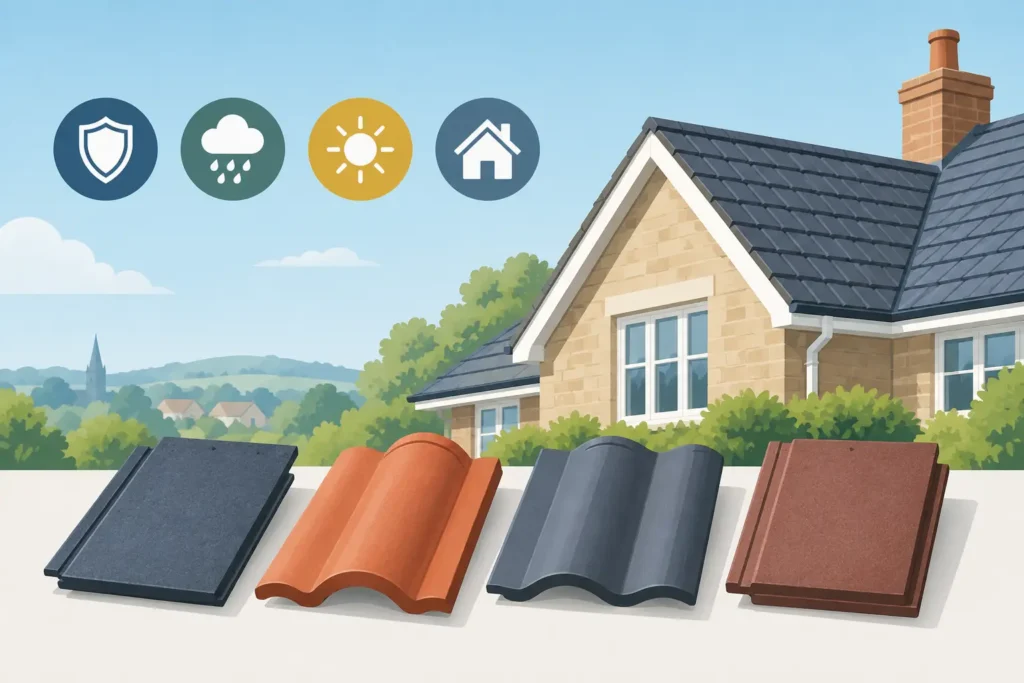
A roof replacement is not a purchase most property owners want to make twice. The best roof tiles for longevity are those that suit the structure of your property, the local weather and the standard of installation – not simply the tiles with the highest advertised lifespan.
For homes and commercial properties across Northamptonshire, slate, clay and concrete are the three main pitched-roof options. Each can provide decades of dependable protection when specified properly and fitted by qualified roofers. The right choice comes down to balancing service life with budget, appearance, roof weight and future maintenance.
What Makes a Roof Tile Last?
A long-lasting tile needs to do more than resist rain. It must cope with frost, wind uplift, changing temperatures and the gradual movement that occurs in any roof structure. In the Midlands, repeated wet and cold spells make frost resistance particularly relevant. Water absorbed into a poor-quality or damaged tile can freeze, expand and eventually cause cracking or surface breakdown.
The tile itself is only one part of the roof system. Underfelt, battens, fixings, flashing, ridge work and ventilation all affect how long a roof performs well. A premium tile installed on tired battens or with inadequate fixings will not deliver the lifespan expected of it.
This is why comparing materials on their own can be misleading. A well-installed concrete tile roof can outlast a poorly fitted clay roof, while natural slate needs a suitable roof structure and experienced installation to achieve its full potential.
Best Roof Tiles for Longevity: The Main Options
Natural slate
Natural slate is widely regarded as the longest-lasting roofing material. Good-quality slate can often last 100 years or more, and some historic roofs have remained in service far beyond that. It is naturally dense, has very low water absorption and handles frost well. Its appearance also tends to age gracefully, making it a popular choice for character properties and higher-value homes.
The trade-off is cost. Natural slate has a higher initial price than most tile alternatives, and it is heavier than some modern materials. Your roof structure may need assessment before a slate installation, particularly where a different covering is being replaced. Slate also requires careful grading, fixing and detailing around valleys, chimneys and abutments.
For an owner planning to remain in a property for many years, or for a building where traditional appearance matters, natural slate can represent excellent long-term value. It is not always the most practical answer for every budget or roof design.
Clay tiles
Clay tiles have a proven history on British homes and can last 60 to 100 years when they are high quality and professionally installed. They retain their colour well, resist rot and can provide a classic finish that suits period homes, rural properties and many modern developments.
Clay is particularly valued for its appearance, with a depth of colour and texture that is difficult to copy exactly. However, clay tiles can be brittle if walked on carelessly, and individual tiles may crack following impact or severe weather. They also vary in quality, so choosing a reputable manufacturer and the correct product for the roof pitch is essential.
A clay tile roof needs sound fixings and proper ventilation beneath the covering. If these details are right, it offers a very strong balance of longevity, appearance and ongoing maintenance.
Concrete tiles
Concrete tiles are one of the most common choices for homes in Northamptonshire. They are generally more affordable than slate or clay, readily available in a wide range of profiles and colours, and can last around 40 to 60 years or longer with suitable care.
Modern concrete tiles are durable, but they are heavier than many homeowners expect. The roof structure must be capable of supporting the load, especially when replacing a lighter material. Over time, the factory-applied surface finish may weather and become more porous, which can encourage moss growth in shaded areas. This does not automatically mean the roof has failed, but it may increase cleaning and maintenance requirements.
Concrete is often the sensible choice where dependable performance and manageable upfront cost are the priority. It is particularly well suited to straightforward replacement roofs, provided the entire roof system is renewed or repaired to the required standard.
Synthetic slate and composite tiles
Composite and synthetic slate products can provide the slate appearance at a lower weight than natural stone. Many are designed to resist fading, impact and water absorption, and they can be useful where roof loading is a concern or where planning requirements call for a slate-style finish.
Their expected lifespan varies significantly by manufacturer and product quality. Some are designed for several decades of service, but they do not have the centuries-long track record of natural slate. A strong guarantee can offer reassurance, but it is still worth checking what is covered and whether the guarantee applies to materials, workmanship or both.
Choose for Your Roof, Not Just the Material
The longest-lasting roof covering is one that is appropriate for the property. Before selecting tiles, a roofer should consider the roof pitch, existing structure, exposure to wind, condition of the timberwork and drainage arrangements. A shallow-pitched roof may need a specific tile profile or additional measures to prevent wind-driven rain from getting beneath the covering.
The location of the property matters too. An exposed site can require enhanced mechanical fixings, while a heavily shaded roof may be more prone to moss and algae. Trees close to the building can drop debris into gutters and valleys, allowing water to back up beneath tiles if routine clearance is ignored.
Appearance should be part of the decision, but it should not be the only factor. A tile that complements neighbouring homes may be preferable in a conservation area or established street, while a commercial property may need a more practical, cost-led specification. If planning permission or building control requirements apply, these should be checked before work begins.
Installation Has a Major Effect on Lifespan
Even the best roof tiles cannot compensate for poor workmanship. Tiles need the correct overlap, secure fixing pattern and suitable battens. Roof junctions need particular attention, as chimneys, valleys, roof windows and abutments are common places for leaks to develop when flashing or detailing is substandard.
A full roof replacement is also an opportunity to inspect the roof structure, upgrade breathable membrane where appropriate and ensure ventilation is adequate. Trapped moisture can damage timbers and reduce the effectiveness of insulation, even if the external tiles look sound.
At Weathershield Roofing and Guttering Services Ltd, the focus is on the full roof system rather than just the visible covering. This helps property owners make a sound decision based on the condition of the roof and the expected demands on it.
Protecting a Long-Lasting Tiled Roof
A durable roof still benefits from periodic checks. You do not need to climb onto the roof yourself, and doing so can damage tiles or create a safety risk. Instead, look for warning signs from ground level, such as slipped tiles, broken ridge tiles, staining on walls, blocked gutters or loose flashing.
Keeping gutters, gullies and valleys clear is one of the simplest ways to protect the roof. When rainwater cannot drain freely, it can overflow into areas that were never designed to hold standing water. Moss should not be removed aggressively with pressure washing, as this can damage tile surfaces and force water beneath the roof covering.
After storms, it is sensible to arrange an inspection if you notice fallen tiles, debris around the property or a new damp patch indoors. Small repairs made promptly are usually far less disruptive than allowing water ingress to affect insulation, timber and ceilings.
When Replacement Is Better Than Repair
A few broken tiles do not necessarily mean a new roof is needed. Localised repairs can be effective where the roof is otherwise in good condition and matching materials are available. However, widespread cracking, repeated leaks, deteriorated underfelt or failing battens may indicate that patch repairs are only delaying a larger problem.
If a roof is approaching the end of its expected life, replacement gives you the chance to choose a material that better suits the building and your long-term plans. Ask for a clear explanation of the recommended tile, associated works and workmanship guarantee before committing. A straightforward quotation should set out what is included, rather than leaving essential details to assumption.
The right roof tile is the one that gives your property lasting protection without placing unnecessary demands on its structure or your budget. A professional inspection and clear advice will help you invest with confidence, whether that means a small repair today or a new tiled roof built to serve the property for decades.