
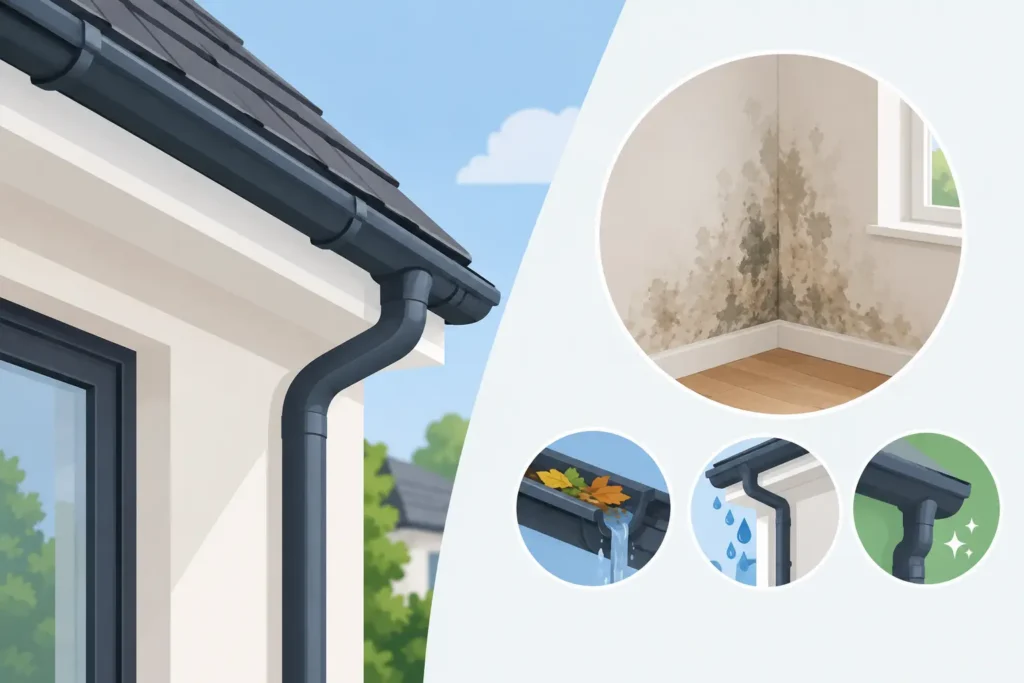
A damp patch high on an outside wall, peeling paint around a window or a musty smell in an upstairs room can all point to the same overlooked problem. Can guttering cause damp? Yes. When rainwater is not collected and carried safely away from the property, it can repeatedly soak brickwork, roofline timbers and walls until moisture finds its way indoors.
Guttering is a relatively simple part of a roof, but it does a vital job. A small blockage or leaking joint may not look urgent during dry weather. After repeated rainfall, however, the water can cause damage that is more expensive and disruptive to put right. Acting early protects the building and helps avoid mistaking a drainage issue for a more serious roof defect.
How guttering causes damp
Your gutters should catch water running from the roof and direct it through downpipes into a suitable drain or soakaway. If that route is blocked, damaged or incorrectly fitted, water spills over the edge or runs behind the gutter instead.
This puts a concentrated amount of water onto the same area of wall every time it rains. Brickwork and mortar are porous to varying degrees, particularly on older properties. Once saturated, they can allow moisture to travel through the wall, affect internal plaster and encourage mould growth where airflow is poor.
Overflowing water can also soak fascias, soffits and the lower edge of the roof. Timber that stays wet may begin to rot, while persistent moisture around roof junctions can create problems that look similar to a roof leak. The longer the issue is left, the more difficult it can be to identify the full extent of the damage.
Common guttering faults that lead to damp
Blocked gutters and downpipes
Leaves, moss from roof tiles, twigs and wind-blown debris often collect in gutters. Water then backs up and overflows, usually at the lowest point or near a blocked outlet. A downpipe can also become blocked lower down, meaning the gutter appears full even when there is no obvious debris at roof level.
This is especially common in autumn and on properties close to trees. Regular cleaning is usually enough to prevent it, but a gutter that has been neglected for several seasons may need more thorough attention.
Leaking joints, cracks and holes
Guttering expands and contracts as temperatures change. Over time, seals at joints can deteriorate, brackets can loosen and older plastic or cast-iron sections can crack. Water escaping from a joint may run down the wall in a narrow, continuous line, leaving staining or damp beneath it.
These leaks are not always easy to spot from the ground. Look for green staining, black marks, water trails on masonry or drips after rain has stopped. A professional inspection can establish whether a local repair is suitable or whether sections of guttering have reached the end of their serviceable life.
Incorrect falls and loose brackets
Gutters need a slight fall towards the downpipe so water drains away efficiently. If the line is too level, sags between brackets or slopes in the wrong direction, standing water can collect. This increases the chance of overflow, leaks and unnecessary strain on the fittings.
Loose or broken brackets may allow the gutter to pull away from the fascia. Water can then run behind it rather than into it, soaking the roofline and wall below. It is a problem worth resolving promptly, particularly where fascias are timber.
Missing, damaged or poorly positioned downpipes
Even a clear gutter will overflow if the downpipe cannot handle the water or does not discharge properly. A disconnected downpipe can release large volumes of rainwater at the base of an external wall. If the ground is flat, damaged or poorly drained, that water can sit against the property and contribute to damp at lower level.
The outlet should direct water into a working drain or suitable drainage system, not simply onto paving next to the house. Where water repeatedly pools, the issue may involve both the guttering and the drainage below.
Signs the damp may be linked to your gutters
The location and timing of the problem often provide the best clues. Guttering-related damp is commonly worse after heavy rain and may appear beneath the eaves, around chimney breasts, beside windows or close to a downpipe.
Outside, check for overflowing gutters during rainfall, stained brickwork, algae growth, crumbling mortar, damp fascias or water marks below gutter joints. Inside, you may notice bubbling paint, discoloured plaster, peeling wallpaper, mould or a damp smell on an upper external wall.
Not every damp problem comes from guttering. Condensation, damaged roof coverings, failed pointing, defective flashing and rising damp can have similar symptoms. For example, moisture confined to the bottom section of a ground-floor wall is less likely to be caused solely by an overflowing gutter, although poor drainage can make it worse. A careful inspection is better than guessing or covering the stain with paint.
Can guttering cause damp in a loft?
It can, particularly where overflowing or leaking gutters have damaged the fascia, soffit or roof edge. Water may then enter around the eaves and affect insulation, rafters or ceiling areas below. A leaking gutter joint close to a roof valley, extension roof or chimney can also make it harder to tell whether the source is the guttering or the roof itself.
If you see damp insulation, staining on roof timbers or daylight around the eaves, arrange an inspection. Roof-level work should not be treated as a DIY job unless it can be completed safely from secure access. Ladders, wet surfaces and damaged roofline materials create avoidable risks.
What to do when you spot an issue
Start by observing the guttering during or shortly after rain, from a safe position on the ground. Look for water spilling over the front, running behind the gutter, leaking from joints or failing to come through the downpipe. Check whether the downpipe outlet is blocked or whether water is collecting against the wall.
If the cause is clearly a small amount of accessible debris, clearing it may restore normal flow. However, do not force tools into downpipes, lean ladders against fragile plastic gutters or attempt repairs at height without suitable equipment. A cracked section, failed joint or uneven gutter run will need a proper repair rather than a temporary patch.
It is also sensible to photograph visible staining and damp patches before any work is carried out. This helps track whether the affected area dries once the water source has been addressed. Brickwork and internal plaster can take time to dry, especially after prolonged wet weather, so an immediate improvement should not be the only measure of success.
Preventing gutter-related damp
Most guttering problems can be avoided with routine maintenance. Gutters should be checked at least twice a year, normally after autumn leaf fall and again following winter weather. Properties beneath trees, buildings with flat roof drainage and commercial premises with larger roof areas may require more frequent inspections.
Keep an eye on the condition of gutter joints, brackets, downpipes, fascias and soffits. After storms, check for dislodged sections and confirm that water is flowing freely. If you are planning roof repairs, a replacement roof or new fascias and soffits, it is worth assessing the guttering at the same time. Replacing one failed element while leaving adjoining materials in poor condition can lead to further work later.
For homeowners, landlords and property managers across Northamptonshire, a professional roofer can assess the complete roofline rather than treating the visible damp mark alone. Weathershield Roofing and Guttering Services Ltd can identify whether the cause is blocked or damaged guttering, a roofline issue or another fault that needs attention.
A dry, well-protected property begins with making sure rainwater has somewhere safe to go. If water is spilling over your gutters or damp keeps returning after rainfall, arranging a prompt inspection can prevent a minor repair becoming a larger problem.