
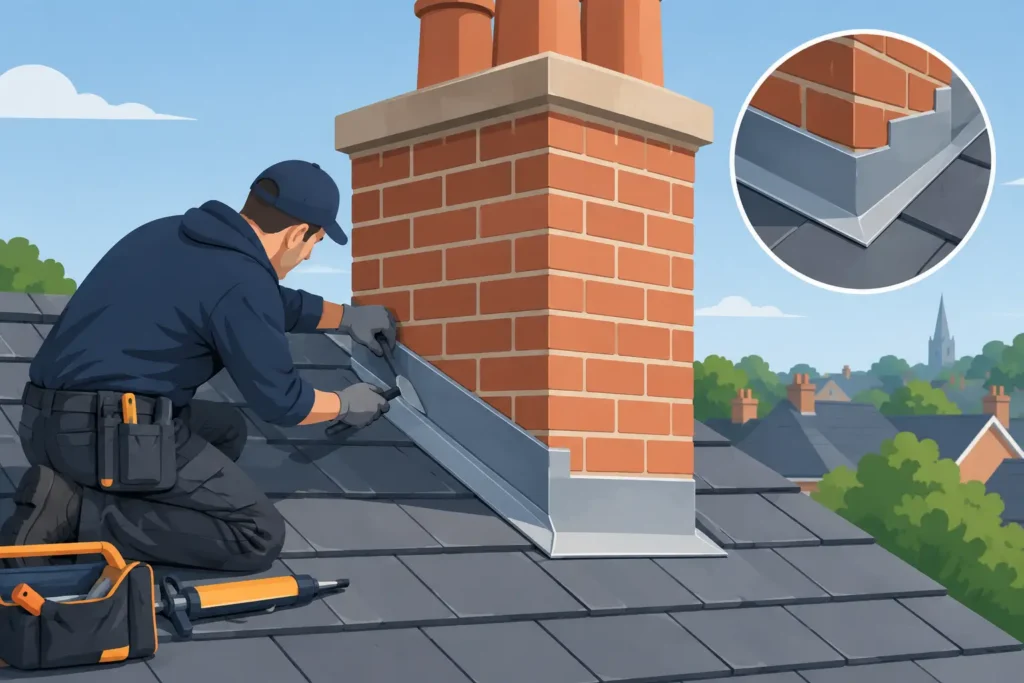
A damp patch beside a chimney breast is rarely just an indoor decorating issue. Water can track beneath roof coverings, soak insulation and timbers, then appear some distance from the actual fault. This chimney flashing repair guide explains what flashing does, the warning signs to look for and when a repair needs a qualified roofer rather than a quick sealant fix.
Chimneys are one of the most exposed parts of a roof. They interrupt the line of the tiles or slates, sit above the roof surface and face years of rain, wind and frost. The metal and mortar details around their base must direct water safely onto the roof, not allow it beneath the covering. When that protection fails, a small gap can become an expensive leak if it is left through another winter.
What chimney flashing is designed to do
Chimney flashing is the weatherproof junction where the chimney stack meets the roof. On most pitched roofs, it is formed from lead, although suitable lead alternatives may sometimes be used. It is normally made up of several overlapping sections: front apron flashing, side soakers or step flashing, and rear flashing or a back gutter where the chimney faces uphill.
Each section has a specific job. The front apron sheds water over the tiles below. Side details prevent wind-driven rain entering the joint, while the rear section handles the large volume of water running down the roof slope behind the stack. The lead is usually dressed into the brickwork and held in a mortar chase, known as a flashing groove.
A sound system allows the roof and chimney to move slightly with temperature changes without opening a route for water. This is why a proper repair is about the full detail, not simply applying sealant along a visible crack.
Signs your chimney flashing may be failing
The clearest sign is water staining on ceilings or walls near the chimney breast, particularly after heavy rain or strong winds. Peeling paint, bubbling plaster, a musty smell in the loft or damp insulation can also point to water ingress around the stack.
Outside, look from ground level for lifted lead, loose mortar, cracked render, missing tiles beside the chimney or vegetation growing from joints. You may also see staining on the roof covering below the stack, which can indicate water has been running underneath rather than over the tiles.
Do not assume every chimney leak is caused by flashing. Damaged pointing, cracked chimney pots, defective flaunching around pots, failed render, porous brickwork or a damaged chimney tray can all let in water. A careful inspection is needed to identify the source before work begins. Replacing flashing will not solve a leak that is entering higher up the chimney stack.
Chimney flashing repair guide: choosing the right repair
The right repair depends on the condition of the lead, the roof covering and the surrounding masonry. A minor issue can sometimes be repaired without replacing every section, but only if the remaining flashing is sound and correctly detailed.
Repointing the flashing groove
Where the lead is still in good condition but the mortar holding it into the brickwork has cracked or fallen away, the existing chase may be cleaned out and repointed. This is often a sensible repair where movement or weathering has loosened the mortar but has not damaged the lead itself.
The work should leave the lead securely wedged and weathered into the joint. Mortar should not be smeared over the face of the flashing as a substitute for a proper chase. That approach tends to crack away and can trap moisture against the brickwork.
Repairing local splits or lifted edges
Small splits, punctures or lifted areas may be repairable if they are limited and the lead has not become thin, brittle or extensively cracked. The repair needs to suit the material and allow for movement. A temporary sealant patch may reduce water ingress in an emergency, but it should not be treated as a long-term repair on an ageing flashing detail.
If the flashing has been pulled loose by wind, the cause also needs checking. Loose tiles, failed mortar or movement in the chimney stack can all affect the repair. Securing the lead without addressing the reason it lifted may only postpone the next leak.
Replacing lead flashing
Replacement is normally the better option where lead has perished, split in several places, been badly patched before, or no longer reaches far enough over the roof covering. A roofer will remove failed material as necessary, inspect adjacent tiles or slates and fit new flashing in properly sized sections.
Lead expands and contracts with changing temperatures, so very long pieces should not be installed as one unrestricted sheet. Correct laps, fixings and expansion allowance matter as much as the lead itself. This is one reason chimney flashing repairs are best assessed in person rather than priced from a photograph alone.
Addressing the chimney and roof together
Sometimes the flashing is not the only issue. If mortar joints are open, bricks are spalling, render is cracked or the flaunching is failing, these defects should be addressed alongside the roof junction. Likewise, broken slates or tiles around the stack must be replaced and correctly bedded.
For older properties, the roof type affects the repair method. Slate roofs often use individual soakers beneath the slates, while tiled roofs may use stepped side flashing. Flat roofs require a different detail altogether. The principle remains the same: create an uninterrupted route for water to run away from the chimney.
Why sealant alone is rarely the answer
Roofing sealants have a place for limited, appropriate repairs, but they are commonly overused around chimneys. A thick bead of mastic over cracked mortar or loose flashing may appear to stop the leak initially. It can then fail under sunlight, frost and movement, often concealing the condition of the joint underneath.
Sealant is particularly unsuitable as a replacement for missing lead, defective back gutters or open flashing grooves. It is also difficult to assess whether a sealed joint is dry and secure without lifting the material. A durable repair should rely on correct laps, sound leadwork and secure masonry details first.
Safety matters on chimney repairs
Working around a chimney involves a sloping roof, fragile edges, overhead materials and potentially unstable brickwork. Even a single-storey extension can present a serious fall risk. Walking on tiles or slates without the right access can crack them and create further leaks.
A professional roofer can inspect the area safely, identify whether scaffolding or other access equipment is needed and check the roof junction properly. This is particularly valuable after storm damage, when a loose flashing may be accompanied by displaced tiles or weakened pointing.
Homeowners can make a useful ground-level check after bad weather, but should avoid climbing onto the roof. Photograph any visible damage from a safe position and note when the leak appears. Does it happen only in driving rain, after prolonged rainfall, or when snow melts? Those details can help narrow down the cause.
Preventing future flashing problems
Regular roof checks are the simplest way to avoid small flashing defects becoming internal damage. Chimneys deserve attention after severe weather and as part of planned maintenance, especially on older homes, rental properties and commercial buildings.
Keep gutters and valleys clear so water does not back up around roof details. Watch for loose mortar, slipped tiles and cracked render before winter. If trees overhang the roof, manage branches that could rub on the chimney or dislodge coverings in high winds.
It is also worth dealing with minor leaks promptly. Moisture around a chimney can affect roof battens, rafters and loft insulation over time. Early work is usually more straightforward than opening ceilings, replacing damaged plaster and repairing concealed timber decay.
When to arrange a professional inspection
Arrange an inspection if you can see damaged flashing, have recurring damp around a chimney breast, notice a leak after wind-driven rain or find loose material on the ground. Urgent attention is sensible where water is actively entering the property, tiles have slipped near the stack or masonry appears unstable.
For property owners across Northamptonshire, a local roofer can assess the chimney, roof covering and guttering as one system, then explain whether a small repair, renewed leadwork or wider chimney work is needed. Weathershield Roofing and Guttering Services Ltd provides clear, no-obligation quotations backed by practical experience and guaranteed workmanship.
A chimney should keep the weather outside without becoming a source of worry. Acting when the first signs appear gives you the best chance of protecting the roof, the rooms below it and the value of the property.