
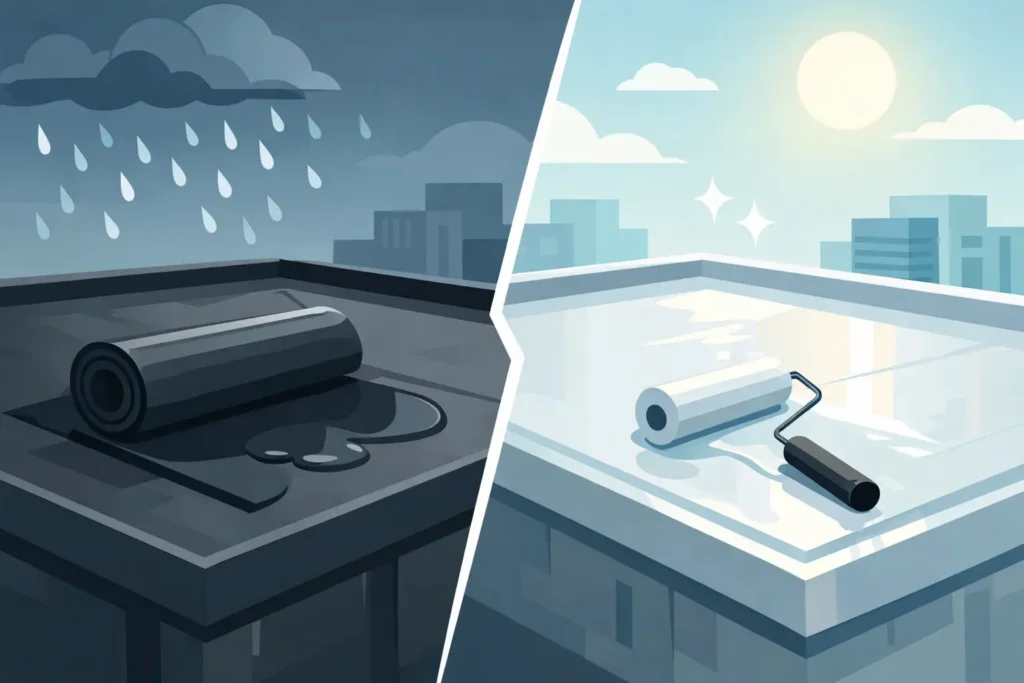
A flat roof over a kitchen extension, garage or commercial unit has to cope with standing water, changing temperatures and regular foot traffic. That is why the choice between EPDM versus GRP roofing should not be made on price alone. Both systems can provide a smart, watertight finish, but they suit different roof shapes, budgets and long-term maintenance plans.
For homeowners and property managers across Northamptonshire, the right answer usually comes down to the size and detail of the roof, the condition of the deck beneath it, and how long you expect the covering to perform before major work is needed.
EPDM versus GRP roofing: the key difference
EPDM is a synthetic rubber membrane. It is supplied in sheets, often large enough to cover a domestic flat roof in one piece, then bonded to the roof deck or fixed mechanically. The finished surface is flexible, dark in colour and designed to move slightly as temperatures rise and fall.
GRP, often called fibreglass roofing, is a liquid-applied system made from resin and glass-reinforced matting. It is built up on site over a suitable deck, normally OSB3 boards, before being finished with a tough topcoat. Once cured, it forms a hard, joint-free surface.
The practical difference is simple: EPDM behaves like a flexible membrane, while GRP creates a rigid shell. Neither is automatically better. A well-installed system of either type is far more valuable than a poor installation of the material that happened to be cheaper.
Where EPDM is often the better choice
EPDM is particularly well suited to straightforward flat roofs with broad, open areas. A single sheet can reduce the number of seams, which means fewer potential weak points. This makes it a popular option for garages, extensions, outbuildings and larger commercial roof sections.
Its flexibility is one of its main strengths. Roof structures naturally experience slight movement, especially between cold winter mornings and warmer summer afternoons. EPDM can accommodate that movement without becoming brittle. It also performs well in wet weather, provided the roof has suitable drainage and the substrate has been prepared correctly.
Installation can be relatively efficient because the membrane is cut to size and adhered in place rather than built up in several resin layers. On a clear, uncomplicated roof, this may help keep labour time and disruption down. However, dry conditions and proper surface preparation still matter. Adhesives must be applied correctly, edges must be securely detailed, and outlets and upstands need close attention.
EPDM is generally easier to repair if it is punctured or damaged. A qualified roofer can often clean the affected area and apply a compatible patch. That does not mean it is maintenance-free. Sharp objects, unsecured garden furniture, frequent foot traffic and poorly fitted roof accessories can all damage a membrane.
When GRP fibreglass roofing makes more sense
GRP is often a strong option for smaller or more detailed roofs, particularly where the finish needs to look neat around awkward shapes, rooflights, parapets or raised edges. Because it is applied as a liquid system, it can be formed around details rather than relying on folded membrane sections.
Once fully cured, GRP produces a clean, hard surface with no visible joints across the main roof area. It is a popular choice for domestic extensions where appearance matters, and for roofs that may occasionally be used for light access. A correctly specified anti-slip finish can also be useful where safe maintenance access is required.
The rigidity of GRP brings benefits, but it also creates a trade-off. It relies on a stable, correctly prepared deck. If boards move, flex excessively or are affected by moisture, the finished surface can crack. This is why preparation is not an optional extra with fibreglass roofing. The deck, trims, edge details and curing conditions all affect the final result.
GRP work can also be more weather-sensitive during installation. Resin systems need the right temperature and dry conditions to cure properly. Rushing the work during unsuitable weather can lead to poor adhesion or an uneven finish, so it is worth allowing a professional contractor to schedule the job properly rather than choosing a date based on convenience alone.
Lifespan and performance in British weather
A professionally installed EPDM roof can commonly last 30 years or more, with some quality systems expected to perform for considerably longer when cared for properly. Its resistance to ultraviolet light and ability to remain flexible make it dependable in the variable weather experienced across Northamptonshire.
A good GRP roof can also offer a long service life, commonly around 20 to 30 years or more depending on the system, installation standard and ongoing condition of the roof. Its topcoat protects the fibreglass beneath, but that surface should be checked periodically for wear, impact damage or cracking around trims and penetrations.
Neither material solves drainage problems by itself. If water regularly pools because the roof has insufficient fall, blocked outlets or sagging deck boards, it will place extra stress on any covering. A proper survey should consider the entire roof construction, not just the visible waterproof layer.
Cost: look beyond the initial quotation
The installed cost of EPDM or GRP varies with roof size, access, the condition of the existing roof, insulation requirements, drainage alterations and the amount of edge detailing required. Removing an old felt roof, replacing rotten boards or working around a rooflight will add to the overall job whichever system is selected.
EPDM can be cost-effective on larger, simple roof areas because there are fewer joints and installation is often more straightforward. GRP can be competitively priced on smaller roofs, but detailed preparation and the multi-stage application process can affect labour costs.
The lowest quote is not always the best value. Ask what is included: removal and disposal of old materials, replacement decking where needed, trims, outlets, insulation, flashings, making good around the roof and a written workmanship guarantee. A quote that leaves these elements unclear can become more expensive once work has started.
Repairs and maintenance
Both EPDM and GRP benefit from a simple inspection once or twice a year, as well as after severe weather. Clear leaves and moss from outlets, check that gutters are flowing freely, and look for damage around rooflights, pipes, walls and edges. Do not use abrasive cleaners or pressure washers unless the roofing manufacturer and installer specifically recommend them.
EPDM repairs are usually localised and can be completed with compatible membrane patches. GRP repairs may involve sanding back the damaged area, rebuilding the fibreglass layer if necessary and applying a fresh topcoat. Both can be repaired successfully, but matching materials and correct preparation are essential.
If a flat roof is leaking, do not assume the membrane has failed. Water can enter at a wall flashing, cracked sealant, blocked outlet or poorly fitted rooflight and travel underneath the surface before appearing indoors. A professional inspection is the quickest way to identify the real source.
Choosing the right flat roof for your property
EPDM is often the sensible choice for a larger, uncomplicated flat roof where flexibility, long-term durability and fewer seams are priorities. GRP is often well suited to smaller, detailed roofs where a hard, tidy, moulded finish is preferred.
The existing structure matters just as much as the roof covering. A roof with a sound, stable deck may be suitable for either system. If there is timber decay, trapped moisture or poor drainage, those issues should be corrected before a new covering is installed. Covering over a problem may hide it for a while, but it rarely prevents a future repair bill.
At Weathershield Roofing and Guttering Services Ltd, we assess the roof as a complete system and explain the practical options in clear terms. That includes the deck, drainage, edge details and the finish that best suits the property, rather than recommending one material for every job.
A flat roof should give you confidence when heavy rain arrives, not another reason to check the ceiling. Choose a system that fits the roof in front of you, have it installed by qualified roofers, and keep the drainage clear so the workmanship has every chance to last.