
A leaking garage roof, tired extension roof or recurring ponding water problem can quickly turn a flat roof into an expensive concern. This fibreglass flat roof review looks at what homeowners and property managers can realistically expect from GRP roofing, where it performs well, and when another system may be the better choice.
Fibreglass, also known as GRP or glass-reinforced plastic, has become a popular flat roofing material across Northamptonshire. When installed properly, it provides a clean, joint-free and hard-wearing waterproof surface. However, the quality of the installation matters just as much as the material itself.
What Is a Fibreglass Flat Roof?
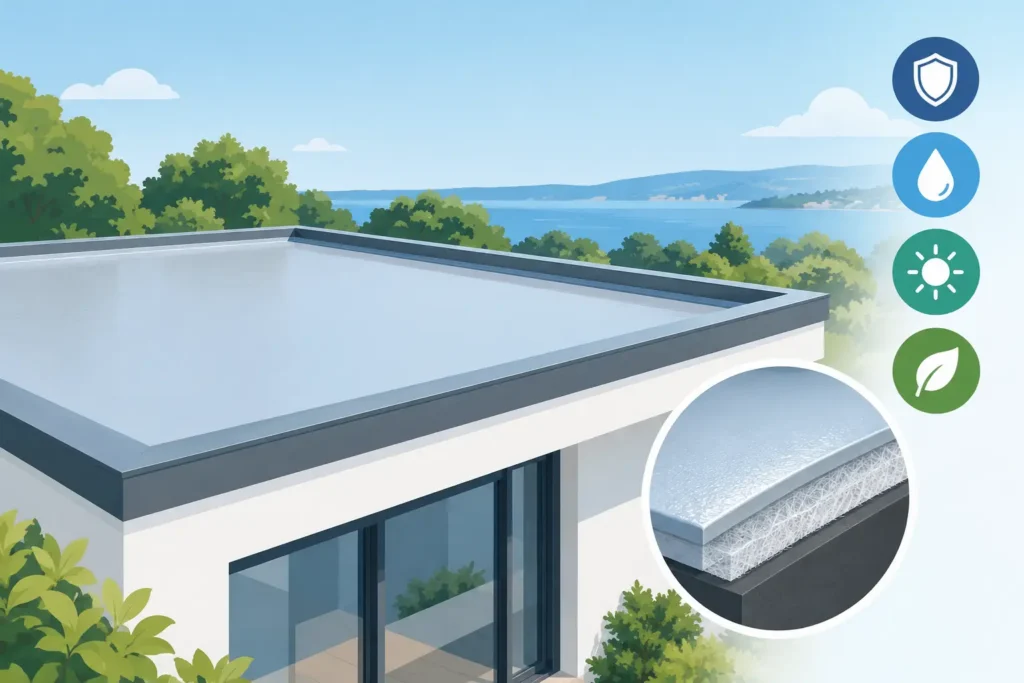
A fibreglass roof is formed on site using layers of resin, chopped strand mat and a protective topcoat. The finished surface cures into one continuous waterproof covering. Unlike felt systems, which use overlapping rolls, a GRP roof has no seams across the main roof area.
It is commonly used on garages, porches, dormers, bay windows, balconies and small to medium-sized extensions. Its neat appearance and solid finish make it particularly suitable where the roof is visible from upper windows or neighbouring properties.
The roof needs a suitable deck beneath it, usually OSB3 boarding designed for roofing use. The surface must be dry, clean and correctly prepared before the fibreglass is laid. This is not a job where shortcuts are hidden for long. Poor preparation, weak edge trims or incorrectly mixed resin can all affect the roof’s lifespan.
Fibreglass Flat Roof Review: The Main Benefits
The strongest point in favour of fibreglass is its durability. A professionally fitted GRP flat roof can often last 20 to 30 years, and sometimes longer with sensible maintenance. It does not rely on vulnerable lap joints, so there are fewer places for water to find its way beneath the covering.
It is also a very tidy roofing system. The final topcoat is available in several colours, although grey remains the usual choice. On a well-finished roof, the edges, corners and outlets look crisp rather than bulky. This can improve the appearance of an extension or garage as well as protecting it.
Fibreglass is resistant to UV exposure and does not soften in strong sunshine in the way some older bitumen products can. It also handles normal foot traffic better than many membrane systems, provided the roof has been designed for occasional access and people avoid sharp objects or unnecessary loading.
For property owners, another advantage is straightforward repair work. If accidental damage occurs, such as a crack from a dropped object or work carried out above the roof, a skilled roofer can usually sand back the affected area and apply new fibreglass. A properly completed repair can blend into the existing roof and restore the waterproof layer.
The Drawbacks to Consider
No roofing material is right for every building. Fibreglass is a rigid system once cured, meaning it has less flexibility than EPDM rubber. Where a roof deck is likely to move, or where the building has ongoing structural movement, GRP can be more prone to cracking.
This does not mean fibreglass is unsuitable for extensions or garages. It means the roof structure must be inspected first and the deck needs to be correctly specified. Covering damp, rotten or uneven timber with a new GRP surface is unlikely to produce a reliable result.
Installation conditions also matter. Resin work is affected by temperature and moisture. A reputable roofer will plan the work around suitable weather and protect the roof properly during the process. Trying to rush a fibreglass installation in wet conditions can cause issues with curing and adhesion.
Cost can be another consideration. Fibreglass is often more expensive upfront than a basic felt replacement, particularly if the existing boards, insulation, fascias or drainage details also need attention. Yet comparing quotes on material price alone can be misleading. A cheaper roof that requires repeated patching may cost more over time than a correctly installed system with a longer service life.
How Much Does a GRP Flat Roof Cost?
The price of a fibreglass flat roof depends on the roof size, access, condition of the existing structure and the amount of detail involved. A simple rectangular garage roof is generally quicker and more economical than an extension roof with lanterns, abutments, outlets and several changes in level.
A proper quote should account for stripping off the old roof covering where needed, inspecting or replacing the timber deck, fitting edge trims, forming suitable falls and connecting rainwater drainage. If insulation is being upgraded as part of the project, this will also affect the cost.
For a clear comparison, ask what is included rather than focusing only on the final figure. It is worth checking whether the contractor has allowed for waste removal, new decking, trims, gutter adjustments and making good around adjoining walls. These details make the difference between a complete roofing job and a low initial price followed by extras.
Will Fibreglass Stop Ponding Water?
A fibreglass surface is waterproof, but it cannot correct an underlying drainage problem by itself. Flat roofs should have a gentle fall that directs water towards an outlet, gutter or drainage channel. If rainwater sits in the same place for days, the roof may need alterations to its structure or insulation falls.
Small amounts of water after heavy rain are not always a sign of immediate failure. Even so, standing water can leave dirt marks, encourage moss around outlets and make future defects harder to spot. During a roof survey, a roofer should check the direction of the fall, outlet position and whether the existing deck has sagged.
Fibreglass vs Felt and EPDM
Modern felt, EPDM rubber and fibreglass can all provide dependable flat roofing when they are specified and installed correctly. The best choice depends on the roof, budget and the condition of the building beneath it.
Felt is often a practical option for larger roofs and can be cost-effective, especially with modern torch-on systems. It has visible joints, but experienced installation and careful detailing can make it durable. EPDM is flexible and well suited to larger simple roof areas, particularly where movement may be a concern. Its rubber surface is less rigid than GRP, although the finished appearance is different and edge detailing remains important.
Fibreglass is often the preferred choice for smaller roofs with visible edges, intricate shapes or a need for a hard, polished finish. It is also useful where a continuous, seamless surface is a priority. There is no single best material for every flat roof, which is why an on-site inspection is more valuable than a one-size-fits-all recommendation.
What to Look for in a Fibreglass Roof Installation
A good fibreglass roof should feel firm underfoot and have an even, consistent finish. The roof should drain properly, with secure edge trims and neatly formed upstands where it meets walls, doors or rooflights. Flashings and outlet details deserve particular attention because these are the points where water management matters most.
Before work begins, ask how the existing roof deck will be assessed and whether any rotten timber will be replaced. It is also sensible to ask what guarantee is provided for the workmanship and the roofing system. Clear answers are usually a good sign that the contractor has planned the work properly.
At Weathershield Roofing and Guttering Services Ltd, we assess the full roof rather than simply covering the visible problem. For homeowners, landlords and commercial property managers, that means practical advice on the roof structure, drainage and the most suitable material before a quote is prepared.
Keeping a Fibreglass Roof in Good Condition
Fibreglass does not need intensive maintenance, but it should not be ignored. Checking the roof once or twice a year, and after severe weather, helps identify minor concerns before they become leaks. Clear leaves and debris from outlets and gutters, particularly in autumn, so water can drain freely.
Avoid dragging ladders, garden furniture or heavy tools across the surface. If tradespeople need access for solar work, aerials or wall repairs, protect the roof and make sure any penetrations are properly sealed. If you see cracking, blistering, lifting trims or water marks indoors, arrange an inspection promptly rather than relying on temporary sealant.
A well-specified fibreglass roof is a sound long-term investment for many properties, but the right result begins with an honest survey and skilled installation. If you are weighing up a replacement flat roof in Northamptonshire, a professional assessment can give you a clear answer before a small leak becomes a larger repair.