
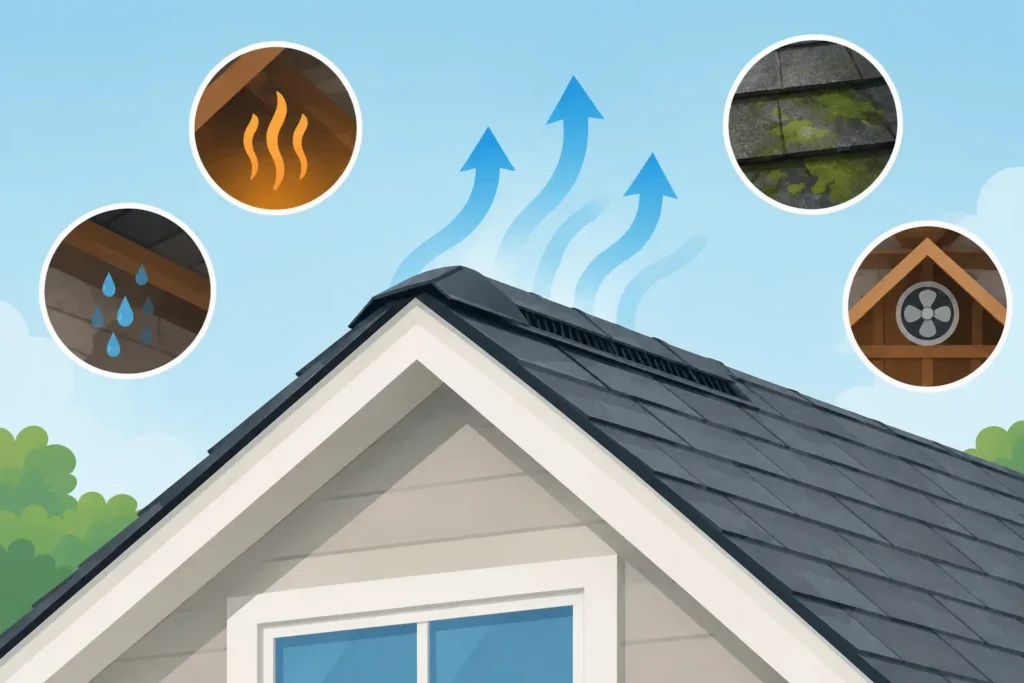
A roof space should not feel damp, stale or excessively hot. When roof ventilation problems develop, they can quietly affect the timbers, insulation and ceilings below long before a visible leak appears. For homeowners, landlords and commercial property managers, spotting the early signs can prevent a relatively straightforward repair becoming a larger roofing project.
Ventilation is not simply about letting air into the loft. A properly designed roof needs controlled airflow that allows moist air to leave without allowing rain, pests or excessive draughts into the building. The right approach depends on the roof design, insulation arrangement and the condition of the existing roofline.
What Roof Ventilation Problems Can Cause
Warm air from kitchens, bathrooms, tumble dryers and everyday living naturally rises into the roof space. If that moisture cannot escape, it can condense on cold roof timbers, felt, nails and the underside of tiles. In winter, this is especially common because the difference between indoor and outdoor temperatures is greater.
Over time, repeated condensation can leave roof timbers damp and encourage mould growth. It may also contribute to timber decay, corrosion around fixings and damp patches on upstairs ceilings. Insulation can become less effective if it is wet or compressed, which may make the property harder and more expensive to heat.
Poor ventilation can also make a roof space extremely hot during warmer weather. Heat build-up is not always a sign of a fault on its own, but when combined with trapped moisture, blocked vents or damaged underlay, it is worth having the roof assessed. Flat roofs, converted lofts and older properties often need particular care because their ventilation requirements can differ from those of a standard pitched roof.
Warning Signs to Look Out For
The loft is often the best place to identify an issue early. If it is safe to access, look for changes after a cold spell or a period of heavy rain. A torch can reveal moisture and staining that is not obvious from the loft hatch.
Common signs include:
- Water droplets or frost on the underside of roof felt, tiles or nails
- A musty smell, mould growth or dark staining on roof timbers
- Damp insulation, particularly around the eaves and outer edges of the loft
- Peeling paint, ceiling stains or recurring mould in upstairs rooms
- Rusting metal fixings or discoloured timber in the roof space
- A loft that feels unusually stuffy, humid or hot
These symptoms do not always point to ventilation alone. A slipped tile, cracked flashing, failed roof valley or leaking pipe can allow water into a loft and produce similar evidence. The difference matters: adding vents will not cure a roof leak, while repairing one small leak may not resolve widespread condensation. A professional inspection helps establish the actual source before work is recommended.
Why Ventilation Fails
Blocked or missing vents are a frequent cause. Over the years, soffit vents can become obstructed by paint, dirt, insulation or insect nests. Tile vents may be damaged, poorly fitted or covered during later roof work. Air bricks can also be blocked, particularly where exterior ground levels have changed.
Insulation installed too tightly at the eaves is another common issue. Loft insulation should help retain heat within the home, but it must not close off the airflow route from the soffits into the roof space. This can happen during well-intended insulation upgrades, especially in older houses where the roof was not designed around modern insulation depths.
Changes inside the property can increase the amount of moisture reaching the loft. New double glazing, improved draught-proofing and loft conversions can all alter how a house breathes. These improvements are usually beneficial, but moisture produced by showering, cooking and drying clothes still needs to be managed with suitable extractor fans and ventilation.
Roof underlay can also affect airflow. Modern breathable membranes may reduce the need for certain ventilation measures, but they do not automatically solve every condensation issue. Older non-breathable felt typically needs effective ventilation above and below it. The roof pitch, tile type and detailing at the ridge and eaves all influence what is suitable.
The Right Fix Depends on the Roof
There is no single vent that suits every property. A roofer should first check whether the problem is condensation, a water ingress issue or a combination of both. They should then assess the condition of the roof covering, underlay, ridge, eaves, fascias, soffits and insulation.
For a pitched roof, the solution may involve clearing or installing soffit vents to improve intake at the eaves, then providing a route for air to leave near the ridge. Tile vents can be a practical option where fitting a continuous ridge vent is not appropriate. In some cases, ventilation trays are fitted at the eaves to keep insulation clear of the airflow path.
A flat roof needs a different approach. Warm-deck and cold-deck flat roof systems are built differently, and ventilation requirements vary accordingly. Adding vents without understanding the roof build-up can create new problems rather than resolve the original one. If moisture is trapped within a flat roof structure, repair or replacement may be a better long-term option.
Loft conversions require particularly careful consideration. The roof space may contain insulation at rafter level, plasterboard finishes and reduced voids, leaving less room for air circulation. Ventilation must be planned alongside insulation and moisture control, rather than treated as an afterthought.
Avoid Quick Fixes That Hide the Cause
A dehumidifier may reduce moisture in a room, but it will not repair a leaking roof, unblock soffit vents or correct insulation that is restricting airflow. Similarly, cleaning mould from timbers can improve appearances temporarily, but the underlying moisture source must be dealt with if it is to stay away.
It is also unwise to cut random openings in fascias, soffits or roof coverings. Poorly placed ventilation can allow wind-driven rain, insects and debris into the roof space. It may affect the appearance of the property or compromise roofing materials if the work is not carried out correctly.
The most effective repairs balance airflow with weather protection. This is why an inspection is useful before any work begins, particularly if the roof is older, has recently been re-covered, or has shown repeated signs of damp.
When to Arrange a Roof Inspection
Arrange an inspection if you can see damp patches, mould in the loft, dripping condensation or signs of timber deterioration. You should also seek advice if ceiling marks return after decorating, even when there is no obvious external roof damage. In rental and commercial properties, prompt action is sensible because persistent damp can affect occupants, finishes and maintenance responsibilities.
A qualified roofer can inspect the roof externally and internally, identify whether water is entering from above or forming through condensation, and explain the available repair options in straightforward terms. The work may be as simple as clearing blocked vents and adjusting insulation, or it may reveal a need for roof repairs, replacement fascias and soffits, or attention to damaged tiles and underlay.
For properties across Northamptonshire, Weathershield Roofing and Guttering Services Ltd can provide practical advice and a free, no-obligation quotation based on the condition of the roof rather than assumptions. Acting when the first signs appear gives you the best chance of protecting the roof structure, keeping the home comfortable and avoiding unnecessary disruption later on.