
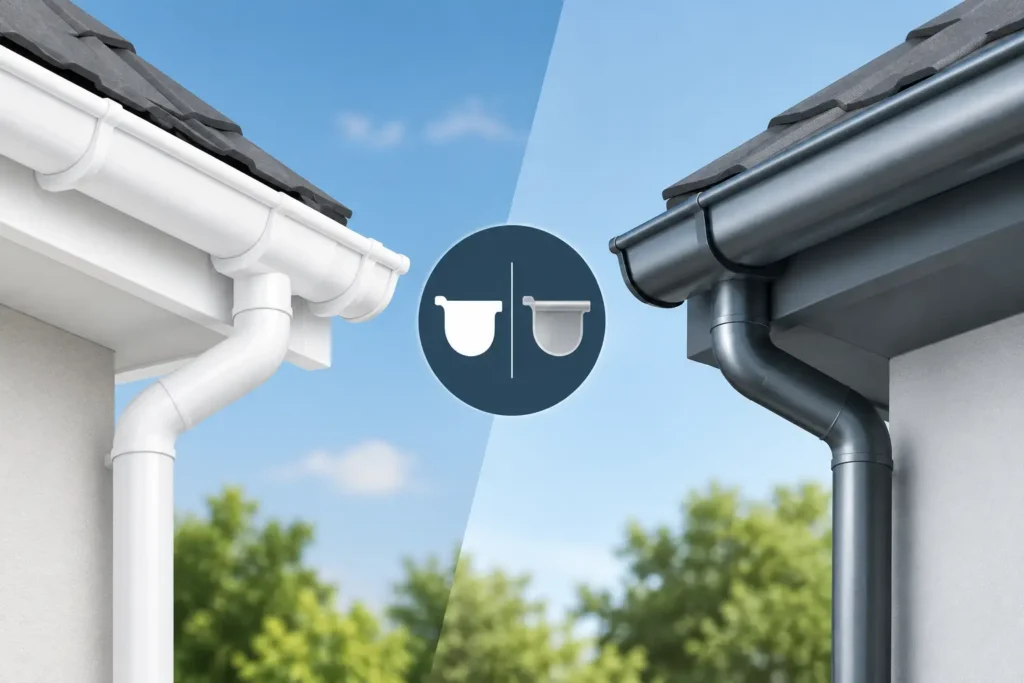
A gutter may look like a simple channel fixed beneath the roofline, but it has a demanding job. It must collect heavy rain, direct it safely to the downpipes and protect walls, fascias, foundations and paths from repeated water exposure. When choosing uPVC versus aluminium guttering, the right answer depends on the building, its surroundings, the roof design and how long you expect the system to serve the property.
For many homes across Northamptonshire, uPVC is the familiar and cost-effective choice. Aluminium is increasingly selected where appearance, long-term performance or larger roof areas matter more. Both can be excellent systems when they are correctly specified and fitted with suitable falls, brackets and outlets.
uPVC versus aluminium guttering at a glance
uPVC guttering is made from durable plastic and is widely used on modern homes, extensions, garages and straightforward replacement projects. It is light, available in several profiles and colours, and generally quick to install. It offers a practical solution for property owners who want dependable rainwater drainage without a high upfront cost.
Aluminium guttering is a metal system, usually supplied in formed lengths or made on site to suit the building. It has a cleaner, more architectural appearance and can be especially useful on period properties, larger homes, commercial premises and buildings where long, uninterrupted gutter runs are preferred.
The material alone does not decide whether a gutter will work well. A poorly fitted premium system can overflow or leak, while a correctly installed uPVC system can give many years of reliable service. The condition of the roof, fascia boards, soffits and existing downpipes should always be assessed before replacement begins.
Cost: initial price versus longer-term value
uPVC is normally the less expensive option to supply and fit. The components are readily available, lightweight to handle and designed to connect through joints and fittings. This makes it a sensible choice when a homeowner needs to replace ageing guttering as part of a planned roofline upgrade or a repair after storm damage.
Aluminium costs more at the outset. Material costs are higher, and the installation may require more specialist measuring, forming and finishing. However, aluminium can offer strong longer-term value for owners planning to remain in a property for many years, or for landlords and commercial property managers who want to reduce disruption from repeat replacement work.
It is worth looking beyond the headline price. A full quote should account for safe access, removal of old materials, gutter profile, number of outlets and downpipes, condition of fascias, and whether repairs are needed to the roof edge. A new gutter fixed to rotten timber or misaligned fascias will not solve the underlying problem.
When uPVC is the sensible financial choice
For a typical semi-detached or detached house with standard roof drainage needs, uPVC often provides the best balance of cost and performance. It is particularly suitable for replacement work where the existing roofline is in good condition and the owner wants a neat, functional finish without paying for a premium material.
Quality matters here. Cheaper plastic guttering can become brittle over time, particularly if it has been exposed to years of sun, frost and movement. Choosing a reputable system and having it fitted with the correct bracket spacing helps prevent sagging and leaking joints.
When aluminium can justify the extra spend
Aluminium is often chosen for buildings with a more distinctive exterior, including larger detached homes, converted barns, character properties and commercial units. It has a crisp finish and is available in colours that can complement windows, cladding and roofline details.
For long roof elevations, seamless aluminium guttering can reduce the number of joints. Fewer joints mean fewer potential points for leaks to develop, although outlets, corners and end caps still need careful fitting and inspection. This can be a real advantage where access is difficult or where a business wants to minimise future maintenance interruptions.
Appearance and suitability for your property
uPVC has come a long way from basic white half-round gutters. Black, brown, grey and heritage-style options are widely available, so it can suit many modern and traditional-looking homes. Its joints are visible, but on most domestic properties they are not intrusive when the work is neat and the guttering is kept clean.
Aluminium tends to offer a more refined, continuous appearance. It does not have the same plastic joins at regular intervals, and its finish can suit properties with aluminium windows, contemporary cladding or smart painted fascias. On a period property, however, neither standard uPVC nor aluminium will always be the correct visual choice. Cast iron or cast-aluminium alternatives may be more appropriate where preserving original character is a priority.
The gutter profile is as important as its material. A deeper profile or higher-capacity system may be needed on a large roof, a steep pitch, or an elevation that receives concentrated water from valleys. Northamptonshire weather includes sharp downpours as well as prolonged wet periods, so gutter capacity should not be based on appearance alone.
Durability in changing British weather
Both materials cope well with rain, but they react differently to temperature changes and impact. uPVC expands and contracts more noticeably than aluminium. Properly installed expansion gaps and correctly positioned brackets allow for this movement. Without them, joints can pull apart or sections can bow during hot and cold weather cycles.
Aluminium is resistant to corrosion and will not rust like untreated steel. It is also less likely to become brittle in cold conditions. That said, it can dent if struck by ladders, falling branches or careless maintenance work. A damaged section may be more involved to repair than a standard uPVC length.
Neither option is immune to blocked gutters. Moss from roofs, leaves from nearby trees and debris from storms can stop water reaching the downpipe. Once water backs up, it can spill over the front edge, run behind the gutter onto the fascia, or add unnecessary weight to brackets. Regular clearing remains essential whichever material you choose.
Maintenance and repair considerations
uPVC guttering is simple to inspect and repair. If a joint seal fails or a length cracks, individual fittings can often be replaced without removing the entire run. This is useful for homeowners who need a focused repair rather than a full replacement.
Over time, uPVC may fade slightly or collect surface staining, especially on pale colours. It can usually be cleaned, although harsh abrasives should be avoided. Check for loose brackets, standing water and drips at joints after periods of heavy rain. These small signs are best dealt with before water reaches the roofline timber.
Aluminium needs relatively little maintenance, but its protective finish should be kept in good condition. Scratches or damage should be assessed early, particularly around joints and outlets. With seamless systems, repairs can be more specialised, so choosing an experienced installer from the beginning is particularly worthwhile.
For both materials, a maintenance visit should include clearing debris, checking downpipes are flowing freely, inspecting seals and outlets, and looking for water marks on walls or fascia boards. Water staining below a gutter is often the first visible warning that something is not draining as it should.
Installation quality matters more than most people expect
Gutters must be fitted to a controlled fall towards the downpipe. Too little fall can leave standing water; too much can look untidy and may cause water to rush past an outlet during a downpour. Brackets need to be secure and spaced appropriately for the material, profile and exposure of the building.
The installer should also consider where water is discharged. Downpipes should direct rainwater safely into suitable drainage, not onto paths where it can create standing water or slippery surfaces. On commercial premises, drainage capacity deserves particular attention because roof areas are often much larger than they appear from ground level.
If your guttering is being replaced alongside fascias and soffits, it is usually more efficient to plan the works together. This gives the contractor a clear view of the roof edge and allows new gutters to be fixed to sound, properly aligned boards. It also creates a consistent finish across the property.
Which guttering should you choose?
Choose uPVC if you want a cost-effective, proven system for a standard home, extension or rental property. It is practical, widely available and easy to repair, provided a quality system is fitted properly.
Consider aluminium if appearance, long gutter runs, reduced jointing or a longer-term investment are higher priorities. It can be an excellent fit for larger homes and commercial properties, but it needs careful specification and professional installation to earn its higher initial cost.
The best place to start is not with a colour chart, but with an inspection of the roofline and drainage needs. A clear, no-obligation assessment from an experienced local roofer can identify whether the issue is the gutter material itself, inadequate capacity, damaged fascias or simply a blocked outlet. Choosing the system that suits the building will protect it far better than choosing solely on price.