
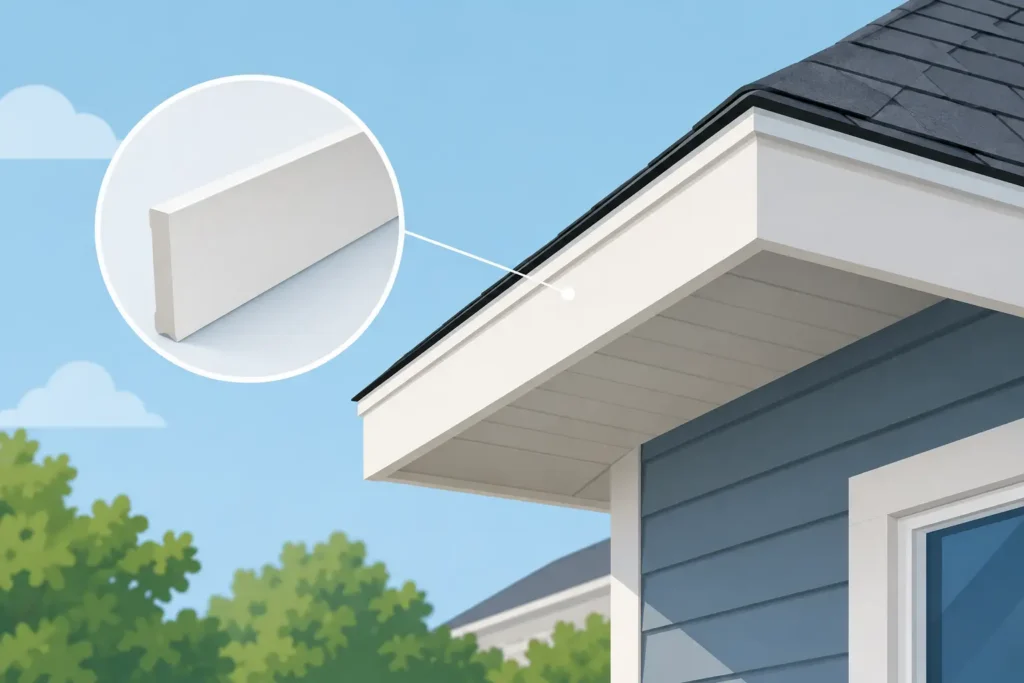
A leaking gutter is not always a gutter problem. When rainwater overflows at the edge of a roof, the cause can be damaged or poorly fitted fascia boards behind it. For homeowners asking what are fascia boards, they are a key part of the roofline: the visible boards fixed along the lower edge of the roof where the guttering is attached.
They may seem like a small finishing detail, but fascia boards have a practical job. They support the guttering, protect the roof structure from weather and give the property a neat, finished appearance. When they begin to rot, crack or pull away, water can reach areas of the roof that should remain dry.
What Are Fascia Boards?
Fascia boards are long, straight boards installed horizontally along the roof eaves. They sit at the point where the roof meets the outer walls of the building, usually behind the guttering. On most pitched roofs, they are fixed to the ends of the roof rafters.
Their main purpose is to create a strong, secure fixing point for gutters and to close off the exposed edge of the roof structure. Without fascia boards, the rafter ends and roof void would be more vulnerable to rain, wind, birds and pests.
Fascias are often discussed alongside soffits and guttering because all three parts work together. The fascia is the upright board at the roof edge. The soffit is the panel underneath it, bridging the gap between the wall and fascia. The gutter sits on the fascia and carries rainwater away from the property.
Why Fascia Boards Matter to Your Roofline
A fascia board is expected to carry more weight than it may appear to. During heavy rainfall, a full gutter can become surprisingly heavy, particularly if leaves, moss or other debris are restricting the flow of water. A secure fascia helps keep the guttering in the correct position so water is directed safely into the downpipes.
The board also protects the edge of the roof from driving rain. If it is split, rotten or missing sections, moisture can get into the timber rafters, felt, soffit area and wall cavity. Left unresolved, what begins as a tired-looking roofline can lead to more extensive repair work.
Good fascias also improve the appearance of a property. Clean, straight roofline boards and properly aligned guttering make a noticeable difference, especially on older homes where weathered timber has started to peel or warp. For landlords and commercial property managers, maintaining the roofline is also a sensible way to protect the condition and presentation of the building.
Common Fascia Board Materials
The right material depends on the property, budget and the condition of the existing roofline. Timber was traditionally used on many homes across Northamptonshire and is still suitable where an authentic appearance is required. However, it needs regular preparation, painting and maintenance to prevent rot.
Modern uPVC fascia boards are a popular choice because they are durable, low maintenance and available in several colours and finishes. White remains common, but black, anthracite grey and wood-effect options can suit more contemporary or traditional properties. A quality installation matters as much as the material itself. Boards must be fixed securely, supported correctly and paired with suitable guttering.
Aluminium fascias are another option, more often considered for certain commercial buildings or specialist projects. They are hard-wearing but may cost more than uPVC. There is no single best material for every roofline, so the condition of the rafters, the type of roof and the desired finish should all be assessed first.
Capping Boards Versus Full Replacement Boards
A capping board is a thinner uPVC board fitted over existing timber fascias. It can be a practical option only when the timber underneath is dry, sound and structurally secure. If the original boards have any significant rot, movement or deterioration, covering them does not solve the underlying problem.
A full replacement fascia board removes the old material and allows the rafter ends and roof edge to be inspected before new boards are installed. This is usually the more reliable approach where there has been water damage or where the existing timber has reached the end of its serviceable life.
Although full replacement can cost more initially, it can prevent repeated repairs and provide a stronger base for new guttering. A professional roofer should explain which option is appropriate rather than recommending a cover-up by default.
Signs Your Fascia Boards Need Attention
Many roofline issues can be spotted from ground level, although close inspection should be left to a trained professional. Peeling paint, stained walls below the eaves and gutters that sag or overflow are all worth investigating.
Look out for these common warning signs:
- cracked, flaking or blistered paint on timber fascias
- soft, darkened or visibly rotten areas in the boards
- gutter brackets pulling loose or gutters sitting unevenly
- water marks on soffits, brickwork or external walls
- gaps at the roof edge where birds or insects may enter
- damp smells, staining or moisture in the loft near the eaves
Not every gutter overflow means the fascias have failed. The gutter may simply be blocked, incorrectly pitched or too small for the roof area. Equally, a loose gutter bracket may have damaged the fascia behind it. A proper inspection identifies the cause before work is priced.
How Fascia Problems Can Affect the Rest of the Roof
Fascia damage is often connected to other roof maintenance issues. Blocked gutters allow water to spill over the front and back of the system. Water running behind the gutter can soak the fascia board and soffit, while water overflowing over the front can stain walls and affect the ground below.
On timber rooflines, repeated wetting can lead to rot at the rafter ends. These structural elements support the roof, so they should not be ignored. In more serious cases, sections of the roof edge may need repair before replacement fascias and gutters can be fitted.
Poor ventilation can also play a part. Many modern roofline systems include ventilation to help control moisture within the roof space. This is particularly relevant when upgrading older properties, as sealing everything tightly without considering airflow can create condensation problems in the loft.
Repair or Replace: Which Is the Better Choice?
Small, localised damage may be repairable if it is caught early and the surrounding board remains solid. For example, a single failed gutter bracket or a short section of damaged trim may not require a complete roofline replacement.
Replacement is usually the better option when rot is widespread, the gutters have repeatedly come loose, or the existing timber requires continual painting and patching. It can also make sense when roof repairs or a new roof are already planned, as access is available and the roof edge can be dealt with properly at the same time.
The best decision depends on what is behind the visible board. A clear survey should check the fascia, soffits, guttering, roof felt and rafter ends, then set out the recommended work in straightforward terms. This gives property owners a realistic view of the cost and avoids spending money on a short-term fix that will soon fail.
Choosing a Roofer for Fascias, Soffits and Guttering
Roofline work is often treated as a separate trade, but it is closely linked to the condition of the roof itself. Choosing a contractor with experience in both roofing and guttering means the whole area can be assessed together rather than in isolation.
Ask whether damaged timber will be removed where necessary, how gutters will be supported, whether ventilation has been considered and what guarantee is included for the work. A written, no-obligation quotation should make clear what is being replaced and whether any hidden defects, such as rotten rafter ends, may need additional attention once the old boards are removed.
Weathershield Roofing and Guttering Services Ltd provides practical roofline inspections and repairs for homes and commercial properties across Northampton and the wider Northamptonshire area. With more than 15 years of hands-on experience, the team can advise whether a focused repair or a full fascia, soffit and guttering replacement is the sensible route.
If your gutters are overflowing, the roofline looks worn or you have noticed signs of damp near the eaves, arranging an inspection early can keep a manageable repair from becoming a larger roofing problem.