
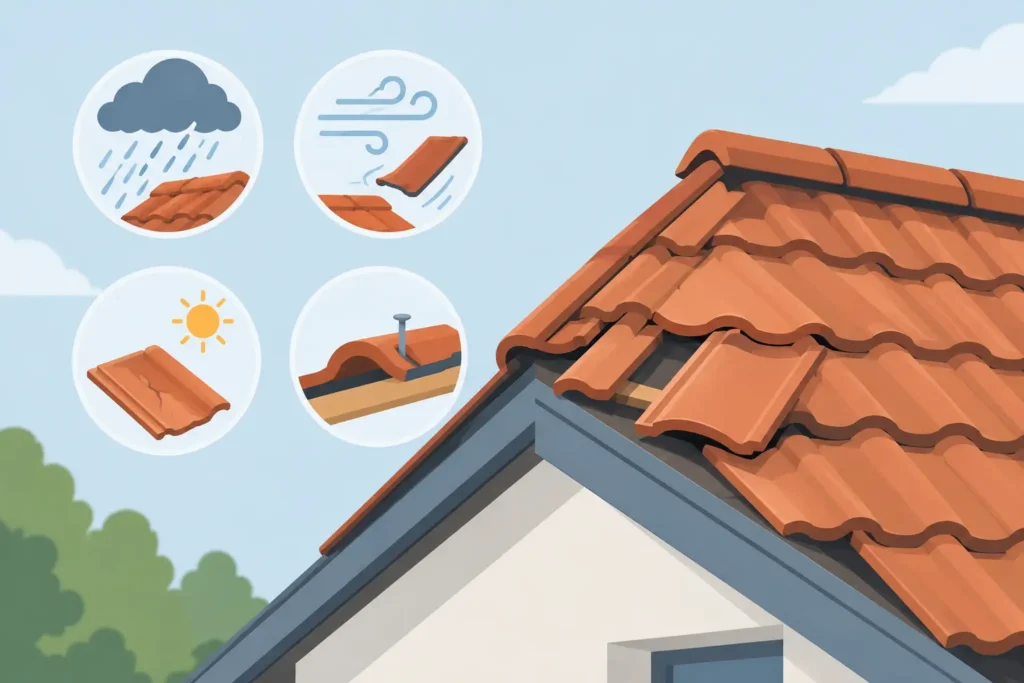
A tile lying in the gutter or on the ground is not just a cosmetic problem. It can leave part of the roof exposed to wind and rain, allowing water to reach the battens, underlay and roof structure beneath. Understanding what causes roof tiles to slip helps homeowners and property managers act before a small repair becomes a wider roofing issue.
A slipped tile does not always mean the whole roof needs replacing. In many cases, the cause is localised and can be repaired promptly. The right solution depends on the tile type, the roof’s age, the condition of the fixings and whether poor weather or an underlying fault has caused the movement.
What Causes Roof Tiles to Slip on a Roof?
Roof tiles are held in place by a combination of their shape, overlap, battens and mechanical fixings such as nails or clips. On older roofs, some tiles may also rely on mortar at the verges, ridge or hips. When one part of that system deteriorates, tiles can begin to move.
Failed or corroded fixings
Nails are a common reason for slipped tiles, particularly on older pitched roofs. Over time, metal fixings can corrode and weaken. This is often called nail sickness. Once a nail head fails or pulls free, the tile is no longer properly secured and may gradually slip down the roof slope.
This issue can affect more than one tile at a time. If several tiles have moved in the same area, it is sensible to have the wider roof checked rather than simply pushing the visible tiles back into place. Reusing a failed fixing may only provide a short-term answer.
Worn, broken or damp roof battens
Battens are the horizontal timber strips beneath the tiles. They provide the fixing point that keeps each course of tiles in position. If battens rot, split or become weak after long-term moisture exposure, they may no longer hold nails securely.
A damaged batten cannot usually be assessed properly from ground level. A roofer may need to lift a small section of tiles to inspect the timber and underlay below. This matters because replacing the tile alone will not resolve a problem caused by decayed battens.
Strong winds and storm damage
Northamptonshire properties can be exposed to driving rain and high winds, especially during winter storms. Wind can lift a loose tile, break a clip or force rain beneath the covering. Even if the tile settles back afterwards, its fixing may have been compromised.
Storm damage tends to be more noticeable around roof edges, valleys, ridges and areas near chimneys, where wind pressure can be greater. A tile that has slipped after bad weather should be dealt with promptly, as the neighbouring tiles may also have been disturbed.
Deteriorating mortar bedding
Ridge tiles, hip tiles and some verge tiles are traditionally secured with mortar. Mortar naturally weathers over the years, becoming cracked, loose or missing. Once it loses its bond, tiles at these exposed roof details can shift or fall.
Localised repointing may be suitable where the rest of the mortar remains sound. Where there is widespread cracking or movement, rebedding the affected tiles is often the more dependable repair. Modern mechanical fixing methods may also be considered where appropriate for the roof design.
Poor installation or unsuitable repairs
Incorrect tile spacing, inadequate overlap, wrong-sized fixings and unsuitable replacement tiles can all contribute to movement. A repair may look acceptable from below while failing to provide the support needed to withstand wind and rain.
This is why roof repairs should match the existing roof covering and be carried out with suitable materials. Tiles vary in profile, size and method of fixing. Fitting a tile that does not sit correctly can create a weak point and affect water run-off across the roof.
Roof movement and ageing materials
Roofs experience small movements through changing temperatures, moisture and the natural settling of a building. Over decades, these movements can affect fixings, mortar and surrounding tiles. Clay and concrete tiles themselves can also become more brittle with age, making them more likely to crack when disturbed.
Ageing does not automatically mean replacement is necessary. A well-maintained roof can often be repaired in sections. However, repeated slipped tiles across several elevations may indicate that the roof covering and its supporting components are approaching the point where more substantial work should be considered.
Warning Signs That Should Not Be Ignored
A slipped tile is the clearest sign, but it is not the only one. Look for gaps or uneven lines in the roof covering, broken tile fragments in gutters, crumbling mortar below ridge tiles, or tiles that appear lower than those around them.
Inside the property, damp patches in loft spaces, wet insulation, staining on ceilings or a musty smell can suggest water is entering through a defect in the roof. These signs do not always originate directly above the visible stain, as water can travel along timbers and underlay before becoming noticeable.
Gutters can also reveal a problem. Pieces of mortar, small tile fragments or rusty nail heads collected in the gutter may point to deterioration on the roof above. Clearing the gutter is useful, but the cause should be checked rather than ignored.
Why a Loose Tile Can Lead to a Bigger Repair
One missing or slipped tile creates a route for wind-driven rain. The underlay beneath may provide temporary protection, but it is not designed to act as the main weatherproof layer for long periods. Continued water exposure can damage battens, insulation and timbers.
There is also a safety risk. A tile that has already moved may fall during the next period of high winds. This can damage cars, conservatories, gutters or neighbouring property, and it presents an obvious hazard where people pass below.
The cost of acting early is usually far lower than dealing with hidden water damage later. A straightforward tile repair can become more involved if moisture has already affected the timberwork or if a number of surrounding tiles have loosened.
What to Do If You Notice Slipped Roof Tiles
Avoid climbing onto the roof or attempting to secure tiles from a ladder. Roof coverings can be fragile, and a loose tile may indicate that nearby materials are not safe to stand on. If a tile has fallen into a public or frequently used area, keep people clear of the immediate location where possible.
From the ground, take note of where the issue is located and whether there are visible cracks, missing tiles or damaged ridge mortar. If it is safe to do so, check the loft for signs of water ingress after rain. This information can help a professional roofer assess the likely cause quickly.
A proper inspection should identify whether the repair involves replacing a single broken tile, renewing clips or nails, repairing battens, rebedding mortar or addressing storm damage over a wider section. The best approach is not always the largest repair, but it should deal with the underlying fault rather than the symptom alone.
Preventing Tiles From Slipping in Future
Regular roof checks are particularly worthwhile after severe weather and for roofs that are more than 15 to 20 years old. You do not need to inspect every tile closely from a ladder. A visual check from the ground, combined with occasional professional maintenance, can catch small defects early.
Keep gutters and valleys clear so rainwater can drain freely. Blockages can cause water to back up beneath tiles and increase the risk of moisture damage to battens and roofline timbers. Trees close to the property should also be managed where falling branches or persistent moss are affecting the roof.
For landlords and commercial property managers, planned inspections are useful for reducing unexpected repair costs and protecting occupants. Recording repairs also makes it easier to identify recurring faults in a particular roof area.
If you have spotted a loose, cracked or missing tile, a prompt professional assessment offers reassurance and helps protect the rest of the roof. Weathershield Roofing and Guttering Services Ltd provides clear, no-obligation quotations for roofing repairs across Northamptonshire, with experienced roofers focused on work that is practical, safe and built to last.