
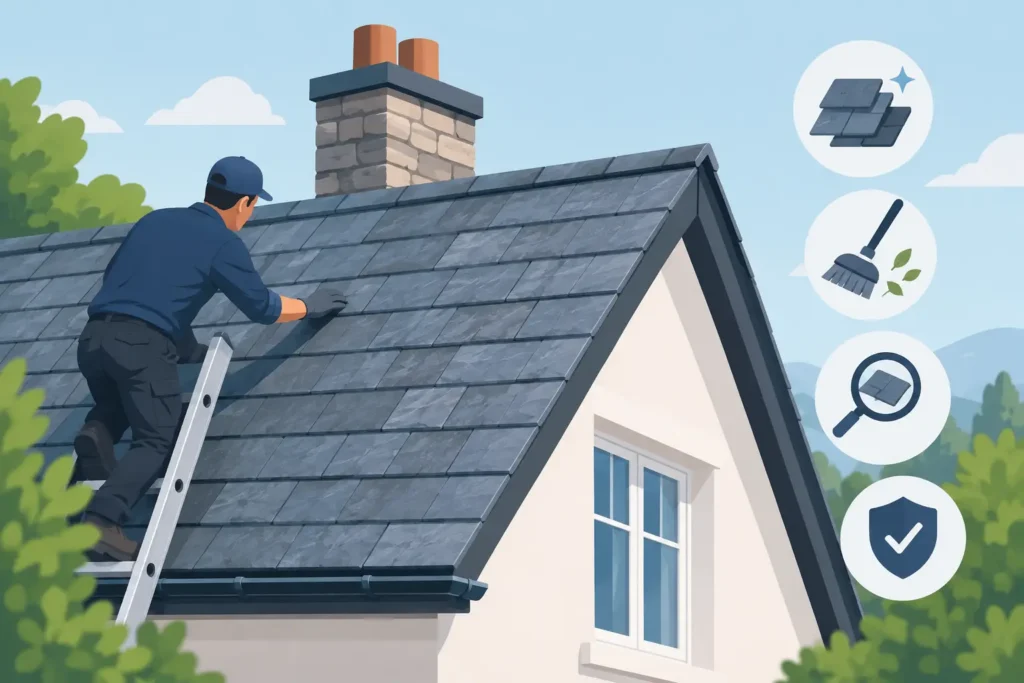
A slate roof can last for generations, but only when small issues are dealt with before Northamptonshire weather turns them into costly repairs. This guide to slate roof care explains what property owners should look out for, what should be left well alone, and when it is sensible to call a qualified roofer.
Slate is one of the most durable roofing materials available. Its strength, natural appearance and long life make it a popular choice for older homes, period properties and quality new installations. However, a slate roof is not maintenance-free. A single slipped slate, failing fixing or blocked gutter can allow water into the roof structure long before a damp patch appears indoors.
Why slate roofs need a different approach
Unlike some modern roofing materials, slate is laid as individual pieces rather than large sheets. Each slate overlaps the next to channel rainwater down the roof, while fixings and surrounding details keep the covering secure. If one part fails, water may find a route beneath the slates without making the problem immediately obvious.
Age also matters. Natural slate itself can remain sound for a very long time, but nails, hooks, mortar work, flashings and underlay may not last as long. This means a roof can look broadly healthy from ground level while still needing targeted repairs.
The right approach is careful maintenance rather than unnecessary replacement. A few broken or slipped slates do not automatically mean the whole roof has reached the end of its life. Equally, repeatedly patching a roof with widespread fixing failures may only delay a larger job. A proper inspection helps establish which situation applies.
Guide to slate roof care: regular checks that prevent damage
For most homes, checking the roof twice a year is a sensible routine: once after winter and again after autumn leaf fall. You should also take a look after particularly severe wind or heavy rain. These checks can usually be carried out safely from the ground using binoculars, or from an upstairs window where there is a clear view. Never climb onto a slate roof yourself. Slates can crack underfoot, and the risk of a fall is serious.
Look for slates that appear out of line, have slipped down, are missing, or show obvious cracks. Pay attention to roof edges, valleys, chimney sides and areas around roof windows, as these are common places for water to concentrate. A slate lying in the gutter or on the ground should never be ignored, even if the roof does not appear to be leaking.
Inside the property, check the loft after prolonged rain. Signs such as fresh water marks, wet insulation, mouldy smells or daylight visible through the roof covering should be investigated promptly. Do not assume that a small mark is harmless. Water can travel along timbers before becoming visible, so the point where a stain appears is not always where the roof fault sits.
Keep gutters and valleys clear
Guttering is a vital part of slate roof care. When gutters become blocked with leaves, moss or debris, rainwater can back up against the roof edge and overflow onto fascias, brickwork and paths. In cold weather, standing water can freeze and add unnecessary weight to the guttering.
Roof valleys deserve particular attention because they carry a large volume of water into a narrow channel. Moss, leaves and loose debris can collect there, slowing drainage and forcing water beneath neighbouring slates. If a valley is hard to see or safely reach, arrange professional cleaning rather than attempting the work from a ladder.
Trees close to the property can increase maintenance needs. Overhanging branches shed leaves, rub against slates in high winds and can cause damage if they break. Sensible pruning can reduce this risk, but any work near the roof should be planned carefully to avoid dislodging the slate covering.
Treat moss with care
Moss on a slate roof is not always an emergency, and a light covering can be common on older properties. The concern is when growth becomes thick enough to hold moisture, block water channels or lift slates at their edges. Moss can also break away and collect in gutters and downpipes.
Avoid aggressive scraping, pressure washing or harsh cleaning methods. Pressure washing can damage slates, remove their natural surface and disturb fixings. It may make the roof look cleaner for a short time while creating more serious problems underneath. A roofer can advise whether controlled removal is needed and use methods suited to the roof’s condition.
Common slate roof faults to act on quickly
A slipped slate is one of the most common problems. This can happen when a fixing corrodes, a nail fails or strong wind catches a vulnerable edge. The repair may be straightforward if addressed early, but leaving an exposed area allows rain to reach battens and underlay.
Cracked or delaminating slates should also be assessed. Natural slate can split over time, particularly where it has been affected by repeated freezing and thawing. A damaged slate may remain in place initially, yet become loose during the next spell of bad weather.
Lead flashings around chimneys, abutments and roof penetrations are another important inspection point. Flashing directs water away from junctions where slate alone cannot provide a watertight finish. Loose, split or poorly sealed flashing can lead to persistent leaks, even when the slate covering is otherwise sound.
Mortar bedding on ridge tiles, verges and chimney work can deteriorate with age. Crumbling mortar, gaps or loose ridge components need timely attention. Modern repair options can sometimes improve security, but the best method depends on the roof’s construction and the condition of the surrounding materials.
Repairs, restoration or replacement?
The decision depends on the extent of the issue, not simply the age of the roof. Localised damage, such as a handful of slipped slates or a small flashing repair, is usually best handled with a focused repair. Matching replacement slates as closely as possible helps maintain the roof’s appearance and performance.
If many slates are failing, the fixings have deteriorated across large areas, or there is repeated water ingress, a more extensive programme may be the better long-term choice. In some cases, sound natural slates can be carefully reclaimed and re-laid with new fixings, while damaged pieces are replaced. This can preserve the character of the property while renewing the roof structure beneath.
For landlords and commercial property managers, planned inspections are especially useful. Small defects are easier to budget for and less disruptive than emergency work after a leak has affected tenants, stock or operations. Keeping a simple record of inspections and repairs also makes it easier to spot recurring issues.
When to call a professional roofer
Call for professional help if you notice missing slates, a leak, loose flashing, damaged guttering, movement around a chimney, or debris falling from the roof. It is also worthwhile arranging an inspection before buying an older property or following major storm damage.
A qualified roofer should assess the roof safely, identify the likely source of any fault and explain whether a repair is sufficient. Be cautious of anyone who recommends a full replacement without a clear inspection or cannot explain the condition of the existing slates, fixings and roofline details.
Weathershield Roofing and Guttering Services Ltd provides practical slate roofing repairs, roof inspections, guttering work and replacement solutions for homeowners and property managers across Northamptonshire. Clear advice and a properly scoped quotation give you a sound basis for deciding what work is genuinely needed.
A slate roof rewards steady attention rather than drastic action. Keep water flowing freely, respond quickly to visible changes, and have uncertain issues checked before the next bout of wind and rain turns a small repair into damage inside the property.