
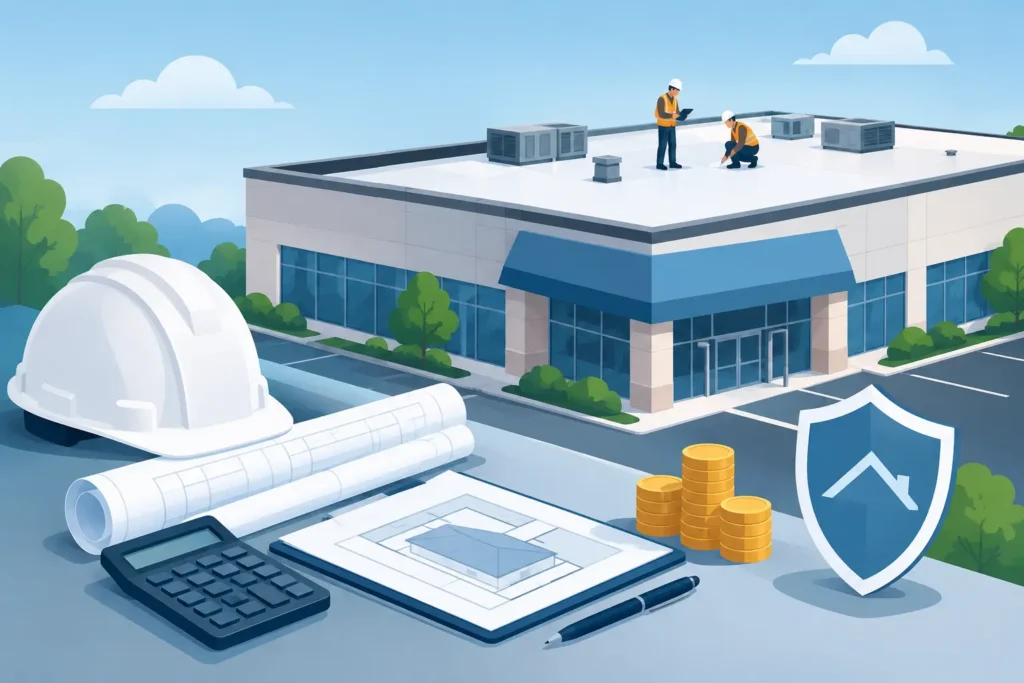
A leaking roof above a shop floor is more than a maintenance issue. It can damage stock, create slip hazards, affect customers’ confidence and force areas of the premises to close. A well-planned retail roof replacement protects the building while helping you keep disruption to trading under control.
For shop owners, landlords, managing agents and facilities teams, the decision is rarely just about whether a roof looks worn. It is about balancing the remaining life of the roof against the growing cost and risk of repeated repairs. Acting at the right time can prevent a manageable project becoming an urgent and expensive problem.
When a Retail Roof Replacement Is the Right Call
Most commercial roofs show warning signs before they fail completely. Persistent leaks are the clearest example, particularly when water enters in more than one area or returns shortly after repairs. Ponding water on a flat roof, cracked coverings, damaged flashings, loose roof edges and blocked outlets can all point to a roof that needs closer attention.
Inside the building, look for damp patches on ceilings, peeling paint, mould growth, dripping around light fittings or a musty smell in upper areas. These signs do not always mean the entire roof has reached the end of its life, but they do justify a professional inspection. Water can travel beneath roof coverings, so the visible stain is not necessarily directly below the fault.
A replacement becomes more likely when repairs are frequent, the roof covering has deteriorated across a wide area, or its expected service life is nearing an end. Spending money on isolated repairs can be sensible when the rest of the roof remains sound. However, repeatedly repairing an ageing roof may only delay a larger failure while increasing costs and disruption.
The best decision follows a clear roof survey. This should assess the condition of the main roof covering, insulation, deck or supporting structure, flashings, drainage points, rooflights and roofline details. For multi-unit retail sites, the survey should also identify whether boundaries, access routes or shared maintenance responsibilities affect the work.
Start With the Building and the Trading Pattern
Retail premises are not all alike. A high street shop with a small pitched roof presents different challenges from a retail park unit with a large flat roof, loading bays and multiple roof-mounted services. The replacement method, programme and access plan should reflect how the premises operate.
Before work begins, consider when the shop is busiest, where customers and deliveries enter, and which parts of the building need uninterrupted use. A project may be easier to complete before opening hours, during quieter trading periods or in planned phases. This depends on the scope of work and the safe access available, but early planning gives you more options.
Stock also needs consideration. Where work is taking place above sales areas or storage rooms, contractors may recommend moving vulnerable stock, protecting displays and agreeing clear exclusion zones. If there is a risk of dust or temporary water ingress while the old covering is removed, sensible preparation can prevent avoidable losses.
Communication matters just as much. Staff should know where contractors will be working, which entrances remain in use and who to contact if an issue arises. Customers do not need a detailed explanation of roofing work, but tidy site management, safe barriers and clear access help maintain a professional impression.
Choosing the Right Roof System
The right system depends on the roof design, budget, condition of the structure and intended lifespan of the property. There is no single material that suits every retail roof.
Flat retail roofs may be renewed using felt systems, single-ply membranes, liquid-applied coverings or other suitable commercial roof solutions. The choice will depend on details such as roof falls, drainage, penetrations, existing substrate and the amount of foot traffic expected for plant maintenance. A roof that regularly supports air conditioning or ventilation servicing needs a system designed to cope with that use.
For pitched retail roofs, slate, tile or other suitable coverings may be appropriate. The condition of battens, underlay, valleys, chimneys and leadwork should be assessed at the same time. Replacing only the visible outer covering while leaving failed supporting materials in place is a false economy.
Insulation is another key consideration. When a roof is being replaced, it can be an opportunity to improve thermal performance where the construction allows. Better insulation may help regulate indoor temperatures and reduce heat loss, but the design must manage condensation correctly. This is why the roof build-up should be specified as a whole rather than treating insulation as an afterthought.
Budget for the Full Scope, Not Just the Covering
The cost of retail roof replacement varies because every building has different access requirements, roof sizes and construction details. A straightforward replacement on an accessible single-storey unit will usually cost less than work on an occupied town-centre property with restricted access, complex drainage and a roof full of services.
A detailed quotation should make clear what is included. That means the roof covering, preparation work, removal of old materials where required, insulation if specified, flashings, drainage details, waste disposal, access equipment and finishing work. It should also explain any assumptions made about the condition of the roof deck or underlying structure.
Some issues cannot be confirmed until parts of the old roof are lifted. Rotten timber, damaged decking or hidden water damage may only become visible during the works. A good contractor will explain this possibility from the outset and discuss any additional work before proceeding wherever possible.
It is tempting to choose solely on the lowest figure, especially when a building has already created unexpected costs. Yet a cheaper quote may exclude vital details, use unsuitable materials or leave no allowance for proper site protection. Compare proposals on scope, workmanship, materials, programme and guarantees, not price alone.
Reducing Disruption During the Works
A replacement roof does not have to mean closing a business, although safety and the scale of the work must always lead the programme. With sensible planning, many retail premises can remain operational while works are completed in stages.
Access should be agreed before the project starts. This may involve scaffolding, mobile access equipment, a skip location or a designated area for materials. On busy sites, deliveries need to be timed so they do not block customer parking, emergency routes or routine stock deliveries.
Weather is an unavoidable factor in roofing. Contractors should monitor conditions and ensure areas opened during the work can be protected properly. A phased approach is often helpful, particularly on larger roofs, because it limits the amount of exposed area at any one time.
Daily housekeeping also makes a real difference. Work areas should be kept orderly, waste removed safely and access routes checked regularly. For customer-facing premises, this level of care protects both safety and your business reputation.
Why Drainage and Roofline Work Should Be Considered Together
A new roof can still suffer premature problems if rainwater is not directed away efficiently. Gutters, downpipes, outlets and drainage channels should be inspected as part of the replacement project. Debris, poor falls and undersized outlets can all cause standing water, overflowing gutters and water running back into the building fabric.
Fascias, soffits and guttering may also need attention on pitched retail properties. Replacing failing roofline components while access equipment is already in place is often more practical than arranging a separate visit later. It also gives the finished roof a complete and properly maintained appearance.
Selecting a Contractor You Can Rely On
Commercial roofing work requires more than fitting a new covering. You need a contractor that understands site safety, occupied buildings, clear scheduling and the importance of protecting your ability to trade. Ask how the work will be managed, who will be your point of contact and what measures will be taken to keep the site safe and tidy.
Experience with both roof replacement and repair work is valuable because it helps the contractor identify whether replacement is genuinely the best route. You should also expect clear paperwork, a written quotation and guarantees that explain the workmanship and materials covered.
For retail property across Northampton, Wellingborough, Rushden, Daventry and the wider Northamptonshire area, Weathershield Roofing and Guttering Services Ltd provides straightforward advice, qualified workmanship and a free, no-obligation estimate. As a family-run local contractor with more than 15 years of practical experience, the focus is on specifying work that suits the building rather than adding unnecessary complexity.
Plan Before the Next Leak Forces the Decision
A retail roof is easy to overlook when it is doing its job. But once water reaches stock, electrics or customer areas, choices become narrower and costs can rise quickly. Arranging an inspection when early signs appear gives you time to review options, budget properly and plan work around the way your premises operate.
The right replacement is not simply a new surface overhead. It is a practical investment in a safer building, more reliable trading conditions and fewer surprises when the weather turns.