
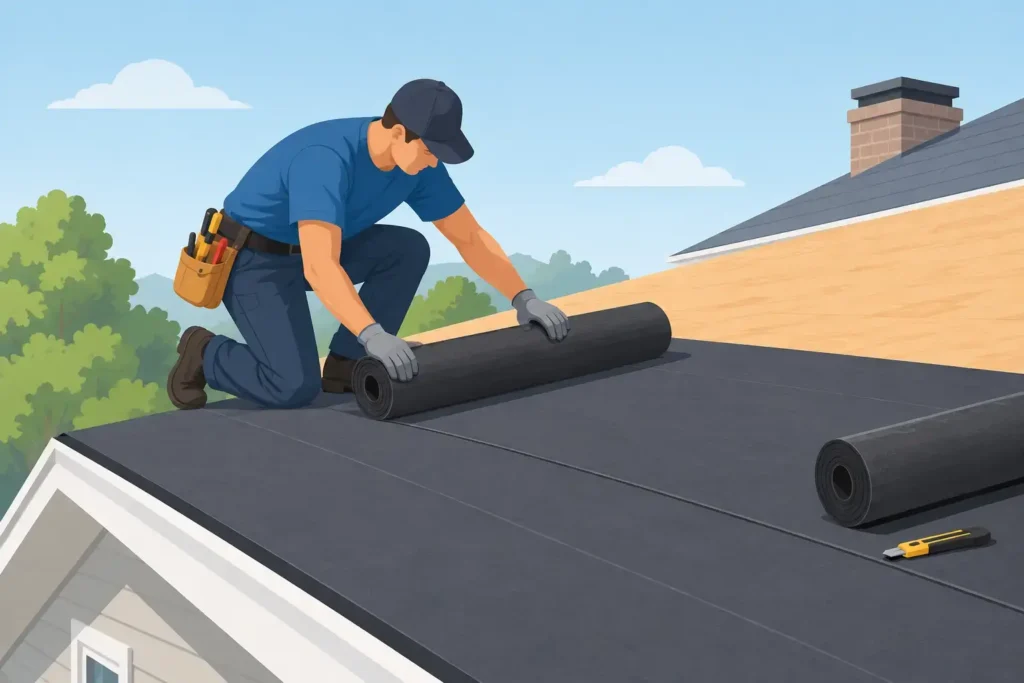
A damaged roof felt layer can allow water into a property long before a tile slips or a ceiling stain becomes obvious. This guide to replacing roof felt explains what the material does, how the work is normally carried out and why the condition of the roof covering matters just as much as the felt beneath it.
Roof felt replacement is rarely a small job on a pitched roof. The existing tiles or slates usually need to be removed in sections to reach the underlay, so it is a good opportunity to inspect battens, flashings, gutters and roofline components at the same time. For homeowners, landlords and property managers, getting the scope right at the start helps avoid repeat disruption and unnecessary expense later.
What roof felt does beneath your roof
Roof felt, more accurately called roofing underlay, sits beneath tiles or slates on most pitched roofs. It provides a secondary weather barrier, helping to direct wind-driven rain or condensation towards the guttering if water gets past the outer roof covering. It also reduces draughts and helps prevent debris, dust and small insects entering the roof space.
Older roofs may have bitumen-based felt that has become brittle, torn or sagged between the rafters. Modern breathable membranes are generally lighter and allow water vapour to escape from the roof void more effectively. They are not a substitute for correct ventilation, but they can help reduce condensation risk when installed as part of a properly designed roof system.
It is worth being clear about the limits of felt. It should not be relied on as the primary waterproof layer. Cracked tiles, damaged slates, failing mortar, loose flashing and blocked gutters still need attention. If the roof covering is at the end of its useful life, replacing felt alone may offer poor value because the same covering must be lifted again when wider repairs are needed.
Signs roof felt may need replacing
A visual inspection from the loft can reveal a great deal. On a dry day, look for daylight around laps and penetrations, tears in the underlay, sagging material, damp patches on rafters or staining beneath the eaves. A musty smell, visible mould or wet insulation can also point to a moisture issue, although condensation rather than a leak may be the cause.
Outside, recurring slipped tiles, broken battens, staining to fascias or water spilling behind gutters may indicate that water is reaching areas it should not. These signs do not automatically mean a full felt replacement is required. A local repair may be sufficient where the underlay and surrounding roof structure remain sound.
The age of the roof is another useful guide. Traditional felt can last many years, but prolonged exposure to heat, cold and moisture eventually causes deterioration. If it is crumbling when touched or hanging in large loose sections, replacement should be considered before wind and rain cause further damage.
Replacing roof felt on a pitched roof
Proper replacement begins with a close survey, not a guess from ground level. A roofer will assess the roof covering, ridge and hip tiles, valleys, chimney flashings, battens, rafters, gutters and the condition of the fascias and soffits. This establishes whether the work is a partial repair, a full re-felt and re-batten, or a complete roof replacement.
Access, protection and stripping the covering
Safe access is essential. Scaffolding is commonly used to provide a secure working platform and protect those below. The area around the property should be kept clear, while vehicles, paths, conservatories and landscaping may need suitable protection from dust and falling debris.
Tiles or slates are then carefully removed, usually in manageable sections. Sound materials can sometimes be retained and re-used, but this depends on their age, condition and compatibility with the new roof build-up. Brittle concrete tiles and older slates can break during removal, so a sensible allowance for replacements is often needed.
Once exposed, the old felt and timber battens are removed. This is the point at which hidden issues become visible. Rotten battens, split rafters, damp insulation, damaged eaves boards or defective leadwork should be dealt with before the roof is closed up again. Covering over defects may make the job appear cheaper, but it leaves the property exposed to future problems.
Installing the new underlay and battens
The new breathable membrane is laid from the eaves upwards, with each course overlapping the one below so water sheds down the roof. It must be correctly supported, dressed into the gutter line and fixed without excessive tension or sagging. Details around valleys, chimneys, roof windows and vents need particular care because these are common leak points.
New treated battens are fixed at the correct gauge for the chosen tile or slate. Their spacing affects how the covering sits, drains and withstands wind loading. The roof covering is then reinstated, with damaged units replaced and mechanical fixings used where required. Ridge and hip details, flashings and verges are checked before the scaffolding comes down.
A well-planned project also considers ventilation. Many roofs need airflow at the eaves, ridge or both to manage moisture within the roof space. The exact requirement depends on the roof design, insulation position and underlay type. This is why replacing felt is not simply a case of stapling a membrane below existing tiles.
Is replacing roof felt a DIY job?
Small, temporary repairs to an accessible section of torn underlay may be possible from inside a loft, but they rarely address the reason the felt failed. Full replacement on a pitched roof involves working at height, stripping weather protection and reinstating the roof correctly. It calls for the right equipment, safe access and experience of roofing details.
There is also a practical risk in attempting it without professional support. Tiles can crack under foot, old battens may not support weight, and an exposed roof can quickly suffer water damage if the weather changes. For most properties, professional installation is the safer and more cost-effective route.
Flat roof felt is a separate type of work. It often refers to mineral felt or torch-on felt systems laid over a flat roof deck. These materials, preparation methods and drainage requirements are different from pitched-roof underlay. A flat roof should be assessed as its own system, including the deck, insulation, outlets, upstands and edge trims.
When a repair is enough and when replacement makes sense
Replacement is usually justified when the underlay is widely degraded, the roof is being stripped for re-battening, or there are several recurring leaks from different areas. It can also make sense during a planned roof replacement, as installing new felt and battens alongside a new covering provides a consistent system with fewer unknowns.
A targeted repair may be the better option when the problem is clearly localised. For example, a single broken tile, failed flashing around a chimney or blocked gutter can cause damp symptoms that look more serious than they are. An honest inspection should identify the source before recommending major work.
Cost will depend on the roof size, pitch, access, chosen materials, extent of timber repairs and whether existing tiles can be reused. Properties with valleys, dormers, chimneys or difficult access require more time and careful detailing. The lowest quote is not always the best value if it excludes scaffolding, waste removal, replacement battens or repairs discovered during stripping.
Questions to ask before approving the work
Before work begins, ask whether the quote includes the removal and disposal of old felt, battens and damaged tiles. Confirm what underlay will be used, whether new battens are included, and how any rotten timber or leadwork will be priced if found. It is also sensible to ask about ventilation provisions, timescales, site protection and workmanship guarantees.
For landlords and commercial property managers, clear records matter. Photographs of defects, a written scope of work and confirmation of the completed repairs can support planned maintenance decisions and provide reassurance for tenants or occupants.
At Weathershield Roofing and Guttering Services Ltd, our qualified team can inspect roof felt concerns across Northamptonshire and explain the most practical route forward, whether that is a local repair, re-felting work or a full replacement roof. A clear assessment before work starts gives you the confidence to protect your property properly, rather than paying for work it does not need.