
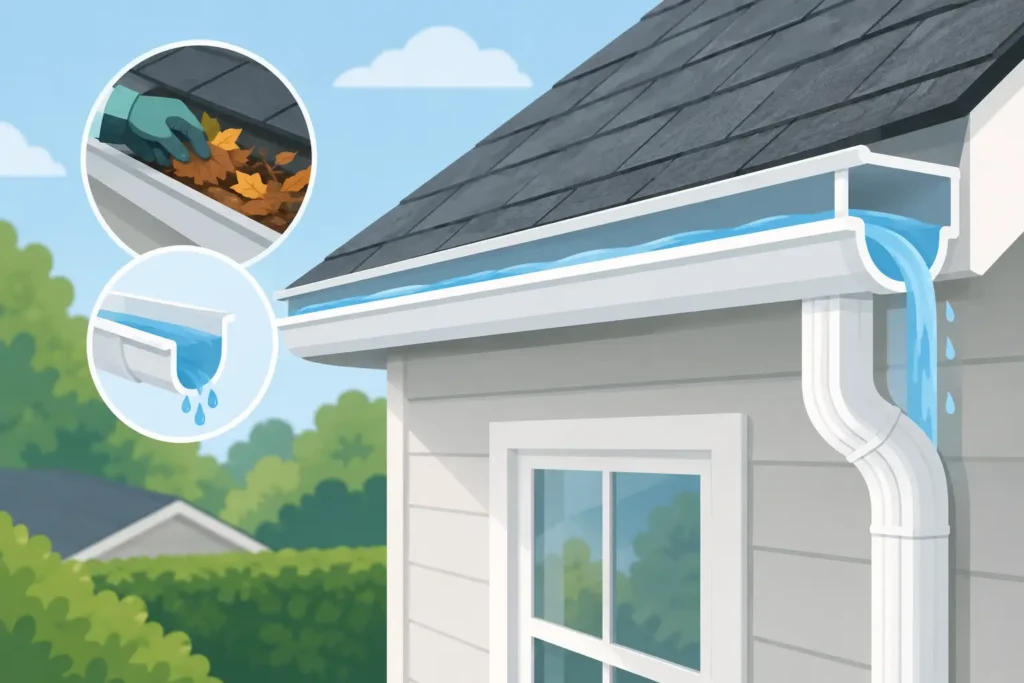
A gutter overflowing in heavy rain is more than an inconvenience. Water can run down brickwork, soak fascias and soffits, flood paths, and eventually find its way into the roofline or foundations. Knowing how to prevent gutter overflow helps protect your property before a small maintenance issue becomes a costly repair.
For homes, rental properties and commercial buildings across Northamptonshire, the answer usually starts with regular checks. However, a clear gutter is only part of the picture. Its size, fall, outlets, downpipes and condition all affect how well it handles a downpour.
How to prevent gutter overflow before heavy rain
Gutters overflow when rainwater cannot move quickly enough from the roof to the downpipe. Leaves and moss are common causes, particularly after autumn or during wet, windy weather. But blockages are not the only reason water spills over the edge.
Start by looking at the guttering during or shortly after rainfall, from a safe position on the ground. Watch where the water is escaping. If it is spilling over at one point, the problem may be localised. If it is overflowing along a whole run, there may be an issue with the gradient, capacity or the downpipe below.
A useful maintenance routine includes clearing gutters at least twice a year – normally in late autumn after most leaves have fallen and again in spring. Properties surrounded by mature trees may need more frequent attention. Flat-roofed extensions, garages and commercial units also need regular outlet checks, as standing water can quickly carry debris into the drainage system.
Do not rely on a quick visual check alone. A gutter can look clear from below while compacted leaves, roof moss or silt are lodged at the outlet. This build-up restricts the water flow exactly where it needs to be strongest.
Clear the gutter and downpipe properly
Removing visible debris from the gutter is a good first step, but the downpipe must also be checked. Water trapped in a blocked downpipe will back up into the gutter and overflow, often at the nearest joint or corner.
After clearing loose leaves and moss, test the system with a controlled flow of water. It should travel steadily towards the outlet and emerge freely at the bottom of the downpipe. If it drains slowly, gurgles, or backs up, there may be a blockage further down. Downpipe guards and underground drainage connections can also collect debris.
Take care when dealing with high-level guttering. Ladders are a common source of avoidable accidents, especially when ground is uneven or wet. For a two-storey property, awkward access, or a commercial building, professional gutter cleaning is the safer option. A qualified roofer can also spot loose clips, failing joints and roofline damage while the guttering is being inspected.
Check the gutter fall and bracket spacing
Gutters are designed to slope gently towards the downpipe. This is known as the fall. If the gutter has dropped, been fitted level, or developed a low spot between brackets, water can collect instead of draining away. During a shower it may cope, but during prolonged rain the trapped water can overflow.
Signs of poor alignment include water sitting in the gutter after rain, overflow from the middle of a run, or water spilling away from the downpipe rather than towards it. Plastic guttering can sag over time, particularly where brackets are spaced too far apart or where heavy debris has been left to build up.
The solution may be as straightforward as refitting brackets and correcting the fall. In other cases, old or warped gutter sections may need replacing. It is worth addressing this promptly because standing water adds weight to the guttering and places extra strain on fascias and fixing points.
Repair leaks before they become overflow points
Not every wet patch beneath a gutter means it is overflowing. Water can escape through worn seals, cracked joints, failed stop ends or split pipework. These leaks are often most visible during steady rain and can soak the wall directly below, leaving staining or encouraging damp problems over time.
Check for drips at joints and corners, as well as any gutter sections pulling away from the fascia. A joint that has shifted slightly may allow water to escape even when the gutter itself is clear. Modern gutter systems use seals that can deteriorate, while older systems may have brittle plastic or corroded metal sections.
Small repairs can be effective when the rest of the installation remains sound. If several joints are leaking, brackets are loose and the guttering is distorted, replacement can offer better value than repeatedly repairing ageing sections. The right choice depends on the condition of the full roofline, not just the most obvious leak.
Make sure the system is large enough for the roof
Some overflow problems happen because the guttering is simply too small for the amount of water coming off the roof. This is more likely on large roof areas, steep pitches, extensions, outbuildings and commercial premises. A heavy Northamptonshire downpour can send a significant volume of water into one short section of gutter very quickly.
Adding another downpipe, increasing the gutter size, or changing the layout can improve drainage where standard domestic guttering is struggling. This needs to be assessed properly. Fitting a larger gutter will not solve a blockage, and adding a downpipe will not help if the underground drain is restricted.
Roof changes can affect capacity too. For example, a new extension or altered roof valley may direct more water towards one gutter run than the original system was designed to handle. Valleys need particular attention because they concentrate water from two roof slopes into a single point.
Keep moss and roof debris under control
Moss does not just sit on roof tiles. As it loosens, it washes into gutters and forms a dense, muddy blockage around outlets. This is especially common on older tiled roofs and shaded properties. Birds’ nests, loose mortar and damaged tile fragments can create similar problems.
Avoid scraping or pressure washing a roof without considering where the debris will go. Large amounts of loosened moss can block a previously clear gutter system within minutes. Roof cleaning, gutter clearance and drainage checks should be planned together.
If tiles are slipping, mortar is breaking down, or vegetation is growing around the roofline, gutter cleaning alone may only provide a temporary result. A roof inspection can identify the source of the debris and prevent it returning so quickly.
Consider gutter guards carefully
Gutter guards can reduce the amount of leaves entering the system, but they are not maintenance-free. Fine mesh guards may catch moss and smaller debris on top, while some brush-style products can hold material in place. Water may then skim over the guard rather than pass into the gutter during heavy rain.
They can work well for certain properties, particularly where large leaves are the main issue and access is difficult. However, they should be chosen to suit the roof type and checked regularly. A poorly fitted guard can cause as many drainage issues as it prevents.
Protect fascias, soffits and the ground below
Overflowing gutters often reveal an issue with the roofline as well as the drainage. Constant water exposure can cause timber fascias to rot, stain uPVC boards, and loosen gutter brackets. At ground level, repeated discharge can erode soil, damage paving and saturate walls near the base of the property.
Make sure downpipes discharge into a suitable drain or surface water system rather than directly against the building. If water pools near the property after rain, the issue may extend beyond the gutter itself. Blocked gullies, damaged drain connections and unsuitable ground levels may all need attention.
For landlords and commercial property managers, planned inspections are particularly worthwhile. A blocked gutter on an occupied building can quickly lead to complaints, internal damp, slippery entrances or disruption to tenants and staff. Recording routine maintenance also makes it easier to spot recurring faults before they worsen.
When to call a professional roofer
A professional inspection is sensible when gutters overflow despite being clear, when water is entering the property, or when the guttering has pulled away from the fascia. It is also advisable if you can see damaged roof tiles, rotten timber, cracked downpipes or persistent damp marks below the eaves.
Weathershield Roofing and Guttering Services Ltd can assess guttering, fascias, soffits and the wider roofline to find the cause rather than treating the visible symptom alone. Whether the work involves clearing a blockage, repairing a section or replacing a failing system, a clear diagnosis helps ensure the repair is proportionate to the problem.
A dry gutter on a sunny day does not always mean the system is working as it should. Keeping an eye on how it performs in real rainfall, then dealing with early warning signs, is one of the simplest ways to protect your property through every season.